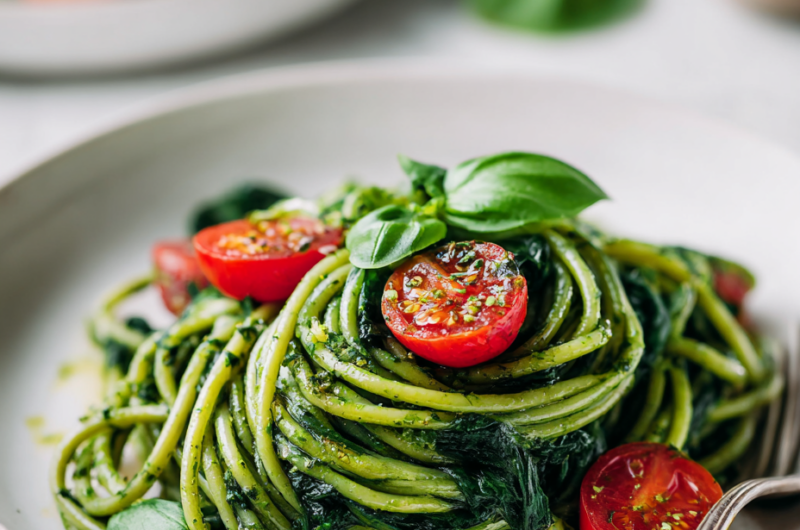
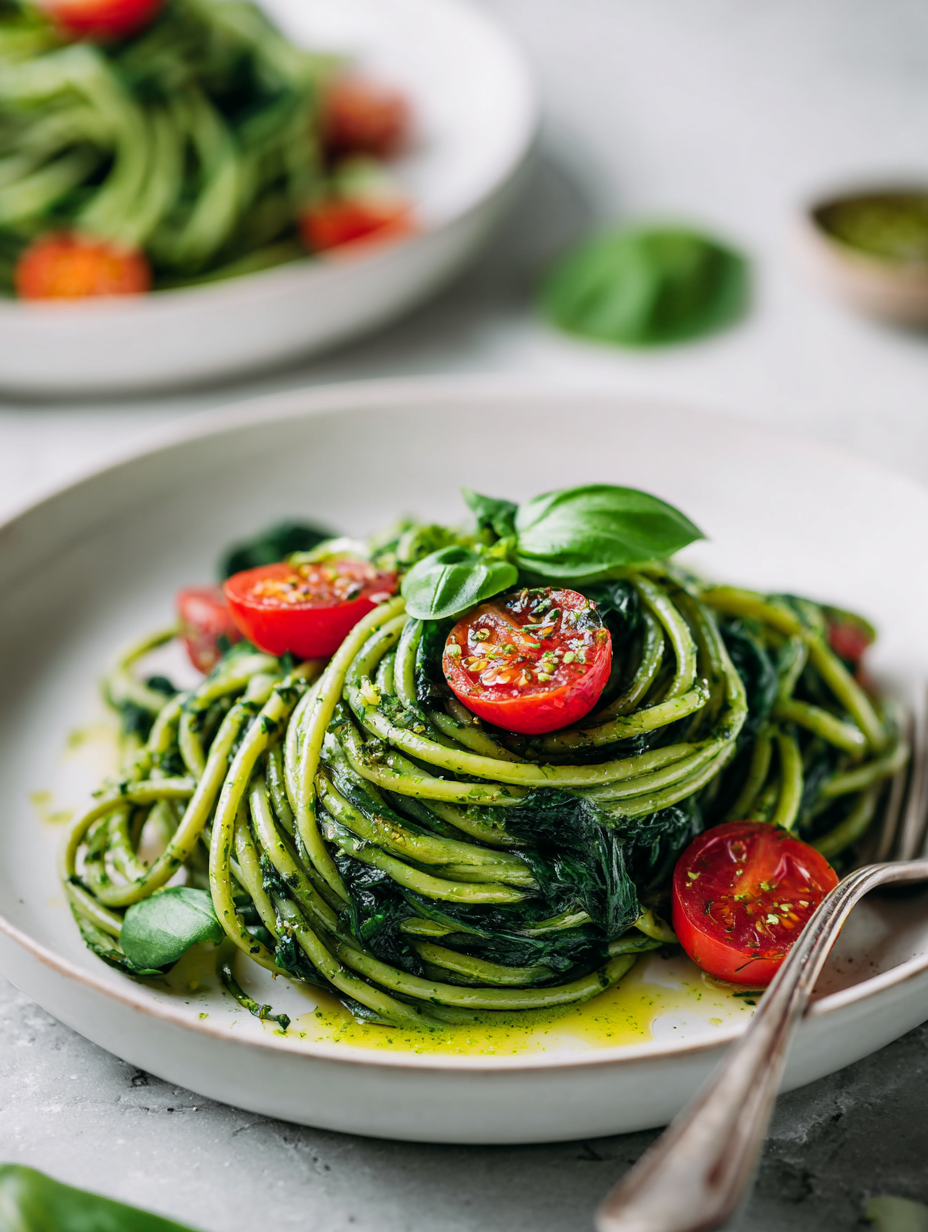
Vibrant green, silky smooth, and surprisingly rich—this vegan spinach pasta is my go-to for those nights when I crave comfort without the heaviness. It’s funny how a handful of fresh spinach, blended into a creamy sauce, can mimic the indulgence of traditional Alfredo but with a fresh, plant-powered punch. I love how quickly it comes together, making me feel like I’ve whipped up something special, even on a busy weeknight.
The secret isn’t just in the ingredients but in how you handle them. I’ve found that the key to that bright, slightly cheesy flavor comes from a simple blend of nutritional yeast and a splash of lemon juice. It’s a flavor that feels familiar but also refreshingly new—kind of like rediscovering an old favorite in a whole new light. This dish isn’t just food; it’s a little act of rebellion against the usual heavy pasta, reminding me that plant foods can be just as satisfying.
Focusing on how to make a vibrant, creamy vegan spinach pasta that mimics the comforting richness of traditional Alfredo, but with a bright, plant-based twist that surprises even skeptics.
The story behind this recipe
- This recipe came together one rainy afternoon when I was craving something green, creamy, but still quick enough to whip up between chores. I remembered how my grandmother used to toss spinach into everything, thinking it was almost magical how it brightened dishes and made them feel nourishing without effort. That nostalgic memory pushed me to create a pasta that’s vibrant, simple, and honest, using ingredients I always have around.
- I love how this dish reminds me that sometimes, the best meals are born from improvisation—a handful of spinach, a splash of lemon, and a bit of pasta. It’s my go-to when I want something wholesome but don’t want to fuss. Plus, it’s a gentle nudge to eat more greens without feeling like I’m forcing it. This pasta isn’t just food; it’s a little celebration of everyday simplicity and the joy of making something satisfying from what’s already in the kitchen.
- heading
- story_type
Key ingredients in my vegan spinach pasta
- Fresh spinach: I love how its vibrant green color turns the sauce into a bright, almost luminous green—make sure to drain it well so it doesn’t water down your sauce.
- Garlic: When minced and gently sautéed, it releases a warm, fragrant aroma that forms the base of the sauce—don’t rush this step or it’ll burn and turn bitter.
- Nutritional yeast: This adds that cheesy, umami depth I crave—start with a tablespoon, then adjust to taste for richness without overpowering.
- Cashews: Soaked until soft, they blend into a silky, creamy texture—if you’re short on time, try using pre-soaked or even a bit of coconut milk for quick creaminess.
- Lemon juice: Brightens everything up with its zesty zing—add it gradually, tasting along the way, until the flavor pops without going too sharp.
- Pasta: I prefer a hearty shape like fettuccine or rigatoni—make sure to save some pasta water, it’s magic for loosening the sauce and making it cling.
- Olive oil: A good drizzle helps the sauce come together smoothly and adds a subtle fruity note—use extra virgin for the best flavor.
Spotlight on key ingredients
Spinach:
- Fresh spinach: Its vibrant green color brightens the sauce and adds a slightly earthy aroma. Wilt it quickly to retain flavor and avoid excess water.
- Spinach leaves: They break down into a silky, vibrant green puree that coats the pasta evenly. Watch for overcooking, which dulls the color and flavor.
Cashews:
- Soaked until soft, they blend into a creamy, smooth sauce with subtle sweetness. Toast lightly before blending for a nuttier depth.
- Their natural oils give the sauce richness and body. If you want a lighter version, try silken tofu—less creamy but still satisfying.
Notes for ingredient swaps
- Dairy-Free: Nutritional yeast adds cheesy flavor without dairy, but if you skip it, expect a slightly less umami-rich sauce.
- Cashews: Soaked cashews create a silky texture, but silken tofu can be a quick, less oily alternative—less creamy, more neutral.
- Lemon Juice: Brightens the sauce with zest and tang; swap with lime for a different citrus note or a splash of vinegar for acidity.
- Pasta: Use gluten-free or chickpea pasta to boost fiber and protein; cooking times may vary, so follow package directions closely.
- Oil: Extra virgin olive oil lends depth and fruitiness; for a nuttier flavor, try toasted sesame oil sparingly—add at the end.
- Spinach: Baby spinach is tender and quick to wilt; mature spinach works too but may need a minute longer to cook down.
- Seasonings: Add a pinch of nutmeg or black pepper for extra warmth and complexity—start small and taste as you go.
Equipment & Tools
- Large pot: Boil pasta efficiently in plenty of water.
- Blender: Puree spinach, cashews, and seasonings into a smooth sauce.
- Skillet: Sauté garlic and wilt spinach for flavor base.
- Slotted spoon: Drain pasta while reserving cooking water.
Step-by-step guide to vegan spinach pasta
- Equipment & Tools: Get a large pot for boiling pasta, a blender for the sauce, a skillet for sautéing garlic, and a slotted spoon for draining.
- Boil the Pasta: Fill a large pot with water, add a generous pinch of salt, and bring to a rolling boil at 100°C (212°F). Cook pasta until al dente, about 8-10 minutes. Drain, reserving ½ cup pasta water.
- Sauté Garlic: While pasta cooks, heat 1 tbsp olive oil in a skillet over medium heat (around 160°C/320°F). Add minced garlic, cook until fragrant and lightly golden, about 30 seconds to 1 minute. Watch for a nutty aroma and slight crackle.
- Prepare Spinach: Add a big handful of fresh spinach to the skillet, cook until wilted, about 2 minutes. The leaves should be bright green and slightly shrunken. If watery, drain excess moisture.
- Make the Sauce: In the blender, combine sautéed garlic and spinach, ½ cup soaked cashews, 2 tbsp nutritional yeast, 1 tbsp lemon juice, and a pinch of salt. Blend until smooth, adding reserved pasta water a little at a time to loosen. Aim for a creamy, silky texture and vivid green hue.
- Combine Pasta & Sauce: Toss cooked pasta into the skillet with the sauce. Stir well over low heat (around 80°C/176°F) until evenly coated. The sauce should cling to the pasta smoothly. If too thick, add more pasta water a splash at a time.
- Final Touches: Taste and adjust salt or lemon. If the sauce cracks or separates, add a tiny splash more pasta water and stir gently. The sauce should shimmer and coat the pasta evenly.
- Rest & Plate: Let the pasta sit for 1 minute off heat. Serve immediately, garnished with extra nutritional yeast or a squeeze of lemon if desired. The sauce should be bright, creamy, and just slightly warm.
Toss the pasta in the skillet with sauce, serve immediately. For a creamier finish, stir in a little more pasta water if needed. Plate with a sprinkle of nutritional yeast or lemon zest for brightness.
How to Know It’s Done
- Pasta is al dente, with a slight bite when tested.
- Sauce is vibrant green, smooth, and coats the pasta evenly.
- Garlic is fragrant and lightly golden, not bitter or burnt.
Vegan Spinach Pasta
Ingredients
Equipment
Method
- Bring a large pot of salted water to a boil, then cook your pasta until al dente, about 8-10 minutes. Drain, reserving ½ cup of the starchy pasta water, and set both aside.
- While the pasta cooks, heat olive oil in a skillet over medium heat and gently sauté the minced garlic until fragrant and lightly golden, about 30 seconds to 1 minute. The garlic should release a warm, nutty aroma.
- Add a generous handful of fresh spinach to the skillet and cook until wilted, about 2 minutes. The leaves should turn bright green and shrink down, releasing a fresh aroma.
- Transfer the sautéed garlic and spinach to a blender. Add the soaked cashews, nutritional yeast, lemon juice, and a pinch of salt. Blend until completely smooth, adding reserved pasta water a little at a time to achieve a silky, vibrant green sauce.
- Pour the creamy green sauce back into the skillet over low heat. Toss in the cooked pasta and stir gently until the sauce coats each strand evenly. If the sauce is too thick, add more reserved pasta water, a splash at a time, until it reaches your desired consistency.
- Taste the pasta and adjust the seasoning with more salt or lemon juice if needed. Once everything is beautifully coated and fragrant, remove from heat and serve immediately, garnished with extra nutritional yeast or lemon zest if desired.
Pro tips for perfect vegan spinach pasta
- Use fresh spinach for a brighter, more vibrant green—avoid wilted or frozen leaves.
- Sauté garlic gently until just fragrant to prevent bitterness and develop a warm aroma.
- Blend cashews thoroughly until silky; a high-speed blender makes all the difference in creaminess.
- Reserve pasta water; its starchy, salty goodness can loosen the sauce and help it cling.
- Taste and adjust lemon and salt at the end; the brightness enhances the green and balances richness.
- When tossing pasta and sauce, do it off heat to prevent the sauce from breaking or separating.
- If sauce thickens too much, add a splash of reserved pasta water and stir until smooth.
Common mistakes and how to fix them
- FORGOT to drain spinach thoroughly → Drain well to prevent watery sauce.
- DUMPED all pasta water at once → Add reserved water gradually for smooth sauce.
- OVER-TORCHED garlic → Sauté on medium heat until fragrant, not browned.
- MISSED the sauce consistency check → Aim for silky, coats pasta smoothly, not clumpy.
Quick fixes and pantry swaps
- When sauce separates, splash in hot pasta water and stir vigorously.
- If pasta sticks, toss with a drizzle of olive oil before serving.
- Splash lemon juice to brighten dull sauce or fix flat flavor.
- Patch a watery sauce by blending in a few soaked cashews again.
- Shield over-torched garlic with a pinch of sugar or a splash of water, then restart.
Make-Ahead and Storage Tips
- Prepare the sauce up to a day in advance; keep it refrigerated to retain brightness and prevent separation.
- Cook pasta ahead and toss with a little olive oil to prevent sticking; store in an airtight container for up to 2 days.
- Reheat pasta gently in hot water or microwave, adding a splash of water or plant-based milk to revive creaminess and avoid dryness.
- For best flavor, add a squeeze of lemon or fresh seasoning after reheating to brighten the dish.
- The sauce may thicken when stored; stir in more hot water or plant milk during reheating until silky again.
Frequently Asked Questions
1. Can I use frozen spinach instead of fresh?
Use fresh spinach for a vibrant color and better flavor. Frozen spinach can be used but drain it well and adjust cooking time.
2. Can I substitute cashews with something else?
Yes, soak cashews in hot water for at least 20 minutes or overnight for the best blending results.
3. How does lemon affect the flavor?
Adding a splash of lemon juice brightens the sauce and balances the richness of the cashews and nutritional yeast.
4. Can I change the type of pasta?
Use any pasta shape you like, but hearty shapes like fettuccine or rigatoni hold the sauce better and feel more satisfying.
5. Why do I need to save pasta water?
Reserve some pasta water before draining. It’s starchy and can help loosen the sauce or make it cling better.
6. How do I know when garlic is done?
Be careful not to overcook garlic; sauté until fragrant and lightly golden to avoid bitterness.
7. What if my sauce is too thin or separates?
If the sauce looks dull or separates, blend it again with a little more water or cashews until smooth.
8. Can I add smoky flavor to this dish?
For a smoky twist, add a pinch of smoked paprika or a few drops of liquid smoke into the sauce during blending.
9. How do I reheat this pasta without losing texture?
Reheat gently in the microwave or on the stove with a splash of plant-based milk or water to restore creaminess.
10. How long can I store leftovers?
This dish is best enjoyed fresh, but storing in an airtight container in the fridge for up to 2 days works well.
This pasta isn’t just about the greens or the creamy sauce; it’s about the ease of making something fresh and satisfying with the simplest ingredients. When the kitchen fills with that bright, garlicky aroma, I know I’ve got a dish that’s both comforting and lively, perfect for those busy nights or whenever I need a quick pick-me-up. It’s a reminder that good food can be straightforward, honest, and full of flavor.
Sometimes, the best meals come from a handful of ingredients and a little bit of patience—no fuss, just honest cooking. This dish has become my go-to for those moments when I want something nourishing without overthinking, and I hope it brings a bit of that simplicity to your table too.

Hi, I’m Harper Evans. Welcome to Crushing These Flavors, my home on the internet where curiosity, comfort, and a deep love for food come together. I’m a passionate food blogger who believes great meals are built through attention, practice, and a willingness to experiment.