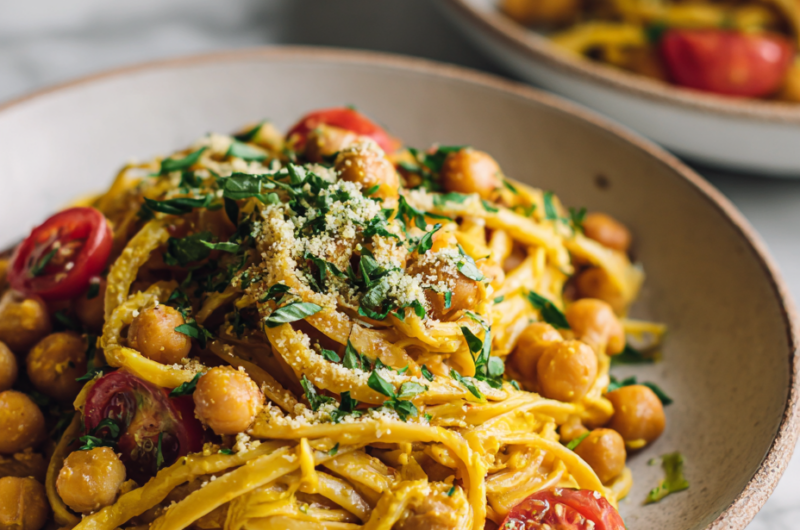
This vegan chickpea pasta is one of those dishes that sneaks up on you with its simple ingredients and comforting flavor. I first made it on a rainy Sunday, looking for something hearty but quick—something to warm up the kitchen and my mood. The chickpeas give it a nutty, almost meaty bite that feels like a childhood favorite, just reimagined for now.
What I love about this recipe is how it turns pantry staples into something more than the sum of its parts. No fancy ingredients, no fuss, just honest, straightforward cooking. It’s the kind of meal that feels like a little victory, especially when you’re craving comfort but want to keep it plant-based and wholesome.
Focusing on the nostalgia of childhood comfort foods, this vegan chickpea pasta transforms simple pantry staples into a hearty, plant-based dish that feels like a warm hug from the past, but with a modern, nutritious twist.
The story behind this recipe
- This recipe was born out of a rainy afternoon when I was digging through my pantry, looking for something nourishing yet quick. I remembered how chickpeas used to be a fallback, but now I see them as the heart of a satisfying meal. Making this dish feels like reclaiming those humble pantry staples and turning them into something special, with just a few kitchen tweaks.
- It’s also a little nod to my childhood — those quick, creamy pasta nights when Mom threw together whatever we had. But this version sneaks in a plant-based protein punch that I think she’d appreciate. It’s honest food, no fuss, just simple flavors that remind me why I love cooking from scratch.
- heading: ‘The story behind this recipe’
Ingredient breakdown
- Chickpeas: I prefer canned for their creamy texture and nutty flavor, but dried work if you soak and cook them well. They add a hearty, protein-packed bite that’s almost meaty.
- Pasta: I like using chickpea pasta because it’s naturally high in protein and has a slightly nutty flavor, but regular whole wheat works too. Look for one with a good bite that holds its shape.
- Garlic: Fresh garlic brings a punch of aroma and warmth. Don’t skimp — crush it to release more of that pungent, sweet-smelling oil before sautéing.
- Lemon: A bright squeeze right at the end lifts the dish from earthy to fresh. Skip it if you prefer a milder profile, but trust me, it’s worth the zing.
- Olive oil: Use a good quality, fruity olive oil for sautéing; it adds depth. If you want a milder flavor, a neutral oil works, but avoid anything too bland.
- Nutritional yeast: It adds a cheesy, umami punch that makes this feel indulgent. If you’re avoiding it, a touch of tahini can mimic that creaminess.
- Herbs & seasonings: Fresh basil or parsley brighten the dish, while a pinch of smoked paprika can add a smoky edge. Use what you love, but don’t skip the fresh herbs—they tie everything together.
Spotlight on key ingredients
Chickpeas:
- I love their nutty aroma and creamy texture that softens beautifully when cooked. They become almost buttery, adding richness and a hearty bite to the dish.
- Pasta: Chickpea pasta has a distinctive slightly nutty flavor and a firm bite. It absorbs flavors well and stays al dente longer, giving the dish a satisfying chew.
Garlic and Lemon:
- Lemon: A fresh squeeze unleashes a bright, zesty aroma that cuts through the earthiness, adding a lively, citrusy punch with each bite.
- Garlic: When sautéed, garlic turns fragrant and golden, releasing a warm, pungent aroma that forms the savory backbone of the dish.
Notes for ingredient swaps
- Canned Chickpeas: I prefer the convenience of canned for their consistent texture and quick cooking. If you use dried, soak and cook them thoroughly, but the flavor and creaminess will be richer.
- Pasta: Chickpea pasta adds extra protein and a nutty flavor, but whole wheat or lentil pasta works too. Look for a variety that holds its shape and has a bit of bite.
- Garlic: Fresh garlic provides a warm, pungent aroma. You can substitute roasted garlic for a sweeter, mellow flavor if you prefer a softer profile.
- Lemon: Brightens the dish with a zesty punch. Lime can be a good substitute, offering a slightly different citrus aroma, or skip it for a milder taste.
- Olive Oil: Use a good quality, fruity extra virgin olive oil for depth. Neutral oils like avocado or vegetable oil work if you want a subtler background flavor.
- Nutritional Yeast: Adds cheesy umami flavor; if unavailable, a splash of tahini can mimic creaminess and richness, though the flavor will be different.
- Herbs & Seasonings: Fresh basil or parsley lift the dish with vibrant notes. Dried herbs are fine too, but add them early to allow flavors to develop. Smoked paprika adds a smoky touch—skip if you prefer a milder profile.
Equipment & Tools
- Large skillet: For sautéing chickpeas and combining ingredients
- Pot: Boiling pasta efficiently
- Colander: Draining pasta and rinsing chickpeas
- Wooden spoon: Stirring and mashing chickpeas
Step-by-step guide to chickpea pasta
- Gather your equipment: a large skillet, a pot for boiling pasta, a wooden spoon, and a colander. The skillet is for sauce, the pot for pasta, and the colander for draining.
- Bring 4 liters (about 4 quarts) of water to a rolling boil in the pot. Add a hefty pinch of salt—salty like the sea. Drop in 8 ounces (about 225 grams) of chickpea pasta. Cook for 8-10 minutes, stirring occasionally, until al dente (just tender with a slight bite).
- While pasta cooks, drain and rinse a 15-ounce (425 grams) can of chickpeas. Pat dry with a towel or paper towel — we want them dry so they don’t splatter in the pan.
- Heat 2 tablespoons (30 ml) of good olive oil in your skillet over medium heat — about 160°C (320°F). When shimmering, toss in 3 minced garlic cloves. Sizzle until fragrant and slightly golden, about 30 seconds.
- Add the chickpeas to the skillet. Stir well, mash a few with the back of your spoon for a creamy texture, and cook for 5 minutes until they turn a little golden and smell nutty.
- Drain your pasta, saving a half-cup of the starchy water. Add the pasta directly to the skillet. Pour in ¼ cup (60 ml) of reserved pasta water to loosen everything. Toss to coat, letting the flavors mingle for 2 minutes.
- Finish with a squeeze of lemon juice, about 1 tablespoon, and a sprinkle of nutritional yeast or vegan cheese if you like. Add chopped fresh basil or parsley—whatever’s fresh or hanging around.
- Taste and adjust salt or lemon. If it feels dry, splash in more pasta water. If it’s too thin, cook a minute longer until it thickens slightly.
- Remove from heat. Rest for 2 minutes, then plate generously. Finish with a drizzle of olive oil and extra herbs if desired.
Let the dish rest for 2 minutes to meld flavors. Drizzle with a little more olive oil, sprinkle herbs, and serve hot. Garnish with extra lemon or herbs for a fresh finish.
How to Know It’s Done
- Pasta is al dente: tender but firm when bitten, with a slight resistance.
- Chickpeas are golden and fragrant, with a slightly crispy exterior.
- Sauce coats pasta smoothly, with a bright lemon aroma and cheesy umami finish.
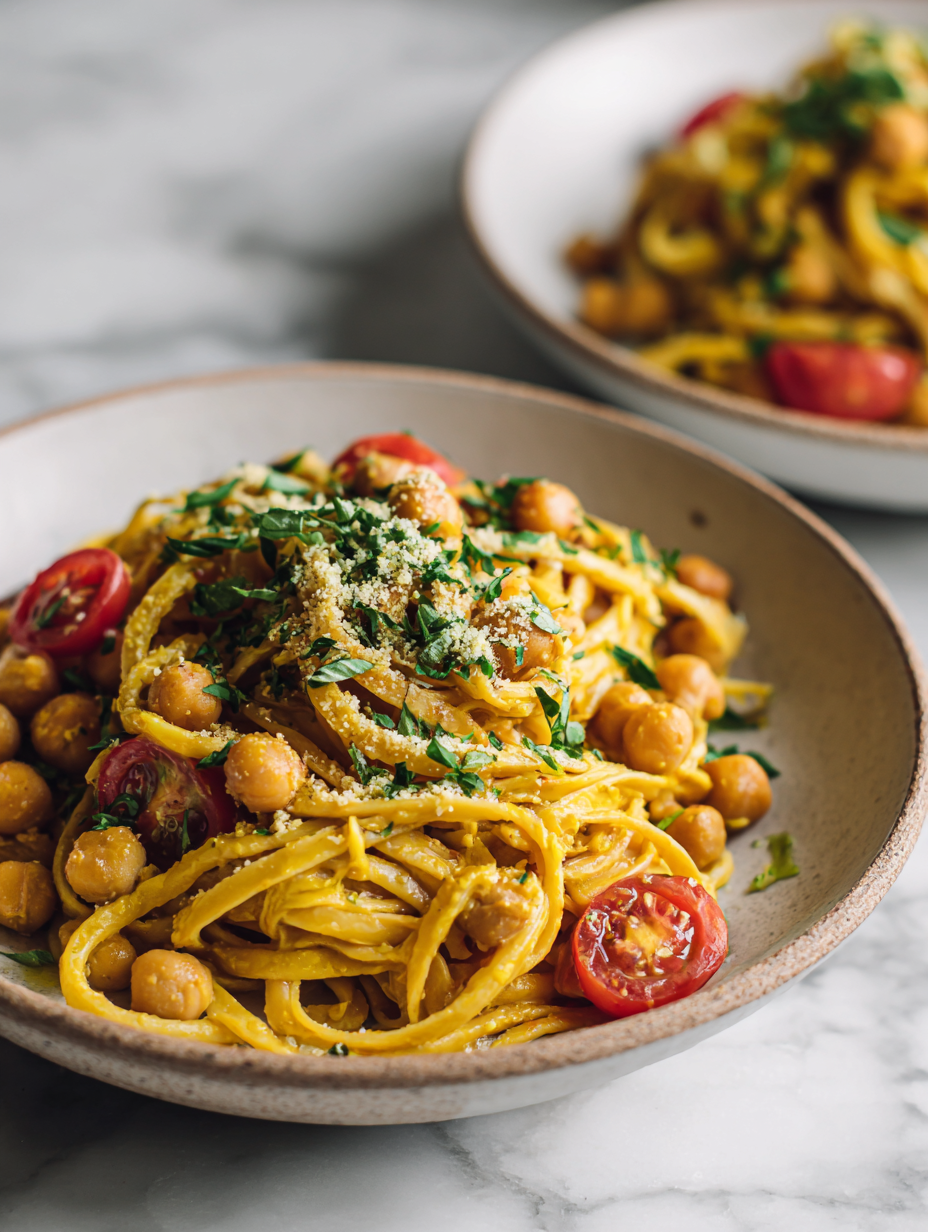
Vegan Chickpea Pasta
Ingredients
Equipment
Method
- Bring a large pot of salted water to a rolling boil. Add chickpea pasta and cook for 8-10 minutes until just tender and al dente. Drain, reserving half a cup of pasta water.
- While the pasta cooks, drain and rinse the canned chickpeas, then pat them dry with a towel to remove excess moisture. Set aside.
- Heat olive oil in a large skillet over medium heat. When shimmering, add the minced garlic and sauté for about 30 seconds until fragrant and golden.
- Add the drained chickpeas to the skillet. Stir and mash a few with the back of your spoon, cooking for 5 minutes until they develop a golden hue and nutty aroma.
- Stir in the cooked pasta directly into the skillet with chickpeas. Pour in a splash of the reserved pasta water to loosen the mixture, then toss everything together for 2 minutes, allowing flavors to meld.
- Squeeze fresh lemon juice over the pasta and chickpeas, then sprinkle with nutritional yeast and chopped herbs. Toss again to coat evenly.
- Adjust seasoning with salt as needed. If the mixture feels too dry, add a little more reserved pasta water to loosen and create a silky sauce.
- Remove from heat and let rest for a minute to allow flavors to settle. Serve hot, garnished with extra herbs and a drizzle of olive oil if desired.
Pro tips for perfect chickpea pasta
- Bolded mini-head: Use fresh garlic and crush it well to release more pungent, sweet-smelling oils for deeper flavor.
- Bolded mini-head: Sauté chickpeas on medium heat until golden, which enhances their nutty aroma and adds a slight crunch.
- Bolded mini-head: When cooking pasta, stir frequently in the first few minutes to prevent sticking and ensure even cooking.
- Bolded mini-head: Add a splash of pasta water just before combining with the sauce to help coat everything smoothly and intensify flavor.
- Bolded mini-head: Finish with a squeeze of lemon right off the heat to preserve the bright, zesty aroma and flavor.
- Bolded mini-head: Toast garlic carefully—once fragrant and golden, remove from heat immediately to avoid bitterness.
- Bolded mini-head: Use high-quality olive oil for sautéing; it adds a fruity depth that elevates the entire dish.
Common mistakes and how to fix them
- FORGOT to drain chickpeas → Rinse and dry to avoid splatters.
- DUMPED pasta into boiling water → Stir immediately to prevent sticking.
- OVER-TORCHED garlic → Sauté on medium heat; turn off once fragrant and golden.
- MISSED adjusting salt → Taste before serving, season gradually.
Quick fixes and pantry swaps
- If sauce is too thick, splash in warm water and stir until smooth.
- When pasta sticks, immediately stir in a bit of olive oil to loosen.
- Splash lemon juice when dish feels flat to brighten flavors instantly.
- Patch over under-seasoned pasta with a pinch of salt and fresh herbs.
- Shield burned garlic by removing the pan from heat quickly and starting fresh if needed.
Prep, store, and reheat tips
- Cook the pasta and chickpeas ahead of time; store separately in airtight containers for up to 3 days. The pasta might absorb flavors, so reheat gently.
- Prepare the garlic and lemon zest in advance; keep refrigerated for up to 2 days. The aroma will intensify upon reheating, so add fresh zest just before serving.
- The dish can be assembled and stored in the fridge for up to 2 days. Reheat on low, stirring often, until warmed through and fragrant again.
- For best flavor, reheat in a skillet over medium-low heat, adding a splash of water or broth to loosen the sauce and keep it vibrant. Sensory cue: smell should be fresh, with no burnt aroma.
Top questions about chickpea pasta
1. Can I use dried chickpeas instead?
Canned chickpeas are quickest and most consistent, offering a soft, creamy texture. Rinse to remove excess salt and skunky smell before cooking.
2. Can dried chickpeas work in this recipe?
Yes, soak dried chickpeas overnight, then cook until tender, about 1-1.5 hours. They’ll have a richer, nuttier flavor but require planning.
3. Can I swap the pasta variety?
Use any pasta you like, but chickpea or lentil pasta adds extra protein and a nutty flavor. Whole wheat also works, with a slightly denser bite.
4. What if I don’t have fresh garlic?
Yes, fresh garlic provides a pungent, sweet aroma. Roasted garlic offers a mellow, caramelized flavor but less pungency. Garlic powder can substitute in a pinch.
5. Can I omit lemon juice?
Lemon brightens the dish with a zesty punch. Lime can be a good substitute, or skip citrus if you prefer a milder flavor.
6. What oil should I use?
Good quality extra virgin olive oil enhances depth and aroma. Neutral oils like avocado or sunflower are fine but won’t add the same fruity note.
7. Can I leave out nutritional yeast?
Nutritional yeast adds cheesy, umami richness. Tahini can be a good alternative, offering creaminess but a different flavor profile.
8. What herbs work best?
Fresh herbs like basil or parsley bring brightness and freshness. Dried herbs are fine but should be added earlier to develop flavor.
9. How do I know when the pasta is done?
Overcooking pasta makes it mushy. Cook until al dente, then drain immediately to keep a firm bite and prevent sticking.
10. My sauce is too thick—what now?
If the sauce becomes too thick, splash in warm water or reserved pasta water and stir. For thin sauce, cook a minute longer to thicken.
This pasta dish feels like a little act of rebellion—simple, hearty, and unexpectedly satisfying. It’s honest food, perfect for a quiet night or when you need a quick, nourishing boost. In the end, it’s those humble pantry staples that remind me why I love to cook from scratch.
Whenever I make this, I’m struck by how comforting and versatile it is. It’s not flashy, but it’s real, filling, and good enough to turn a regular evening into something special without much fuss. Sometimes, that’s all you need.

Hi, I’m Harper Evans. Welcome to Crushing These Flavors, my home on the internet where curiosity, comfort, and a deep love for food come together. I’m a passionate food blogger who believes great meals are built through attention, practice, and a willingness to experiment.