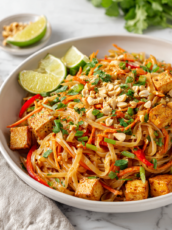
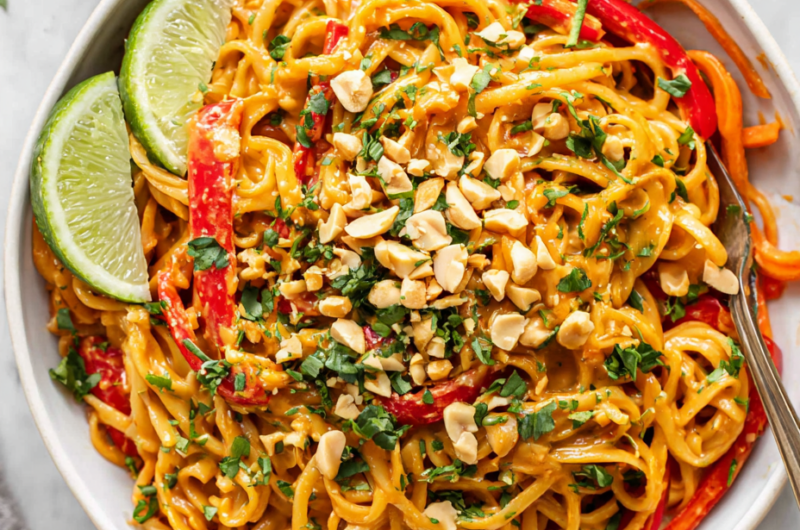
This vegan peanut noodles recipe is a little love letter to those childhood lunchboxes, where gooey peanut sauce was the star. It’s funny how a simple dish can carry so much nostalgia—those creamy, salty, slightly sweet bites always brought comfort, even on the busiest days. Reworking it for today’s plant-based lifestyle keeps that familiar warmth alive, just a bit cleaner and more vibrant.
What I love most is how quick this comes together—it’s fast enough for a weeknight, but special enough to serve for friends. The peanut sauce, with its rich, smoky undertones, coats every strand of noodle and makes the whole kitchen smell like a cozy kitchen in the middle of summer. It’s the kind of dish that makes you smile just as much as it satisfies that craving for something hearty and familiar.
Plus, making this dish is a small act of rebellion against those overly complicated, ingredient-heavy recipes. It’s straightforward, honest food—no fancy tricks, just good ingredients and a little bit of love. Sometimes, that’s all you need to turn a simple bowl into a moment of genuine comfort.
Focusing on the nostalgic comfort of childhood school lunch flavors, this vegan peanut noodles recipe reimagines that familiar, gooey, peanutty goodness with a modern, plant-based twist.
The inspiration behind this dish
- This recipe was born out of a late-night craving for something both nostalgic and quick. I remember sneaking peanut butter sandwiches as a kid, loving how the salty-sweet combo made everything feel like a small gift. Deciding to turn that into a noodle dish felt natural—comfort food with a little more flair, and totally vegan to boot.
- One rainy afternoon, I threw together a quick batch after a long day. The peanut sauce turned out richer and smokier than I expected—like a warm hug in a bowl. It reminded me how simple ingredients, when balanced just right, can create something unexpectedly special. That moment made me realize this dish’s potential to be a go-to for busy nights or lazy weekends.
- heading
- story_type
Ingredients at a Glance
- Creamy peanut butter: I prefer a natural, smooth peanut butter that melts into the sauce, giving it a rich, oozy texture. Skip the chunky stuff unless you like extra crunch in your sauce.
- Soy sauce: It’s my go-to for that salty umami punch, but if you want less salt, dilute it slightly or swap with coconut aminos for a sweeter, milder flavor.
- Lime juice: Brightens everything up with a lemony zing. I like freshly squeezed lime, but bottled works in a pinch—just make sure it’s fresh-tasting.
- Maple syrup: Adds a subtle sweetness that balances the salt and spice. Honey can be used if not vegan, but maple keeps it vegan and adds a slightly caramel note.
- Sesame oil: A little goes a long way to add toasted, nutty aroma—don’t overdo it or it can overpower. Toasted sesame seeds on top really seal the deal.
- Rice vinegar: I love the tang it gives, especially when combined with lime. If you don’t have it, a splash of apple cider vinegar can work, but it’s not quite the same.
- Noodles: I like rice or soba noodles—they soak up the sauce beautifully and give a nice chewy bite. Cook according to package instructions, but don’t overcook—aim for al dente, or they turn mushy.
Spotlight on key ingredients
Peanut Butter:
- Creamy peanut butter: I prefer a natural, smooth peanut butter that melts into the sauce, giving it a rich, oozy texture. Skip the chunky stuff unless you like extra crunch in your sauce.
- Soy sauce: It’s my go-to for that salty umami punch, but if you want less salt, dilute it slightly or swap with coconut aminos for a sweeter, milder flavor.
Lime & Sesame Oil:
- Lime juice: Brightens everything up with a lemony zing. I like freshly squeezed lime, but bottled works in a pinch—just make sure it’s fresh-tasting.
- Sesame oil: A little goes a long way to add toasted, nutty aroma—don’t overdo it or it can overpower. Toasted sesame seeds on top really seal the deal.
Notes for ingredient swaps
- Dairy-Free: Swap traditional dairy ingredients with coconut milk or almond-based options for creaminess without dairy. The flavor remains rich and subtle.
- Nuts: If peanut allergies are a concern, use sunflower seed butter or tahini. These alternatives bring a different, slightly earthier flavor but still creamy.
- Soy Sauce: Coconut aminos can replace soy sauce for a lower-sodium, soy-free option, adding a hint of sweetness and umami.
- Sweetener: Maple syrup can be replaced with agave nectar or brown rice syrup. Each offers a slightly different sweetness profile—try to match the viscosity.
- Oil: Instead of sesame oil, toasted pumpkin seed oil offers a nutty aroma, or simply skip for a lighter, less fragrant finish.
- Lime Juice: Lemon juice is a good substitute if lime isn’t available, though it’s slightly less bright and tangy. Fresh is always better.
- Noodles: Zucchini noodles (zoodles) or kelp noodles can work if you want a low-carb, vegetable-based alternative. They soak up flavors differently but hold well.
Equipment & Tools
- Large pot: Boil the noodles efficiently and evenly.
- Small bowl: Mix and whisk the sauce ingredients.
- Whisk: Blend the sauce smoothly without lumps.
- Tongs or chopsticks: Gently toss noodles with sauce without breaking them.
- Serving bowl: Present the finished dish attractively.
Step-by-step guide to peanut noodles
- Equipment & Tools: Gather a large pot for boiling noodles, a small bowl for mixing sauce, a whisk, tongs or chopsticks, and a serving bowl.
- Boil water: Fill the pot with 4 liters (about 4 quarts) of water, add a pinch of salt, and bring to a rolling boil at 100°C (212°F).
- Cook noodles: Add 200g (7 oz) of rice or soba noodles. Stir gently to prevent sticking. Cook for 8-10 minutes until al dente. Taste-test to check firmness. Drain and rinse with cold water to stop cooking.
- Prepare peanut sauce: In the small bowl, whisk together 3 tbsp natural peanut butter, 2 tbsp soy sauce, 1 tbsp lime juice, 1 tbsp maple syrup, 1 tsp toasted sesame oil, and 1 tsp rice vinegar. Adjust sweetness or salt as needed. Set aside.
- Sauté aromatics (optional): If using garlic or ginger, heat a small pan with a splash of sesame oil over medium heat (about 160°C/320°F). Sauté minced garlic or ginger until fragrant, about 30 seconds. This adds depth to the sauce.
- Combine noodles and sauce: Toss the drained noodles in the bowl with the peanut sauce, ensuring every strand is coated evenly. Use tongs or chopsticks for gentle mixing. The sauce should cling well and look glossy.
- Final touch: Transfer to a serving bowl. Sprinkle with toasted sesame seeds and chopped scallions if desired. Give it a final toss to distribute toppings evenly.
- Resting & Finishing: Let the noodles sit for 2-3 minutes to absorb flavors. Serve warm or at room temperature. For extra crunch, add shredded carrots or cucumber slices right before serving.
Let the noodles rest for 2-3 minutes to meld flavors. Serve in a shallow bowl, garnished with sesame seeds and scallions for visual appeal. Enjoy warm or at room temperature, adjusting toppings as desired.
How to Know It’s Done
- Noodles are cooked al dente, with a slight chew and no mushiness.
- Peanut sauce is smooth, glossy, and coats the noodles evenly.
- Aromatics (if used) are fragrant but not burned, with a light crackle.
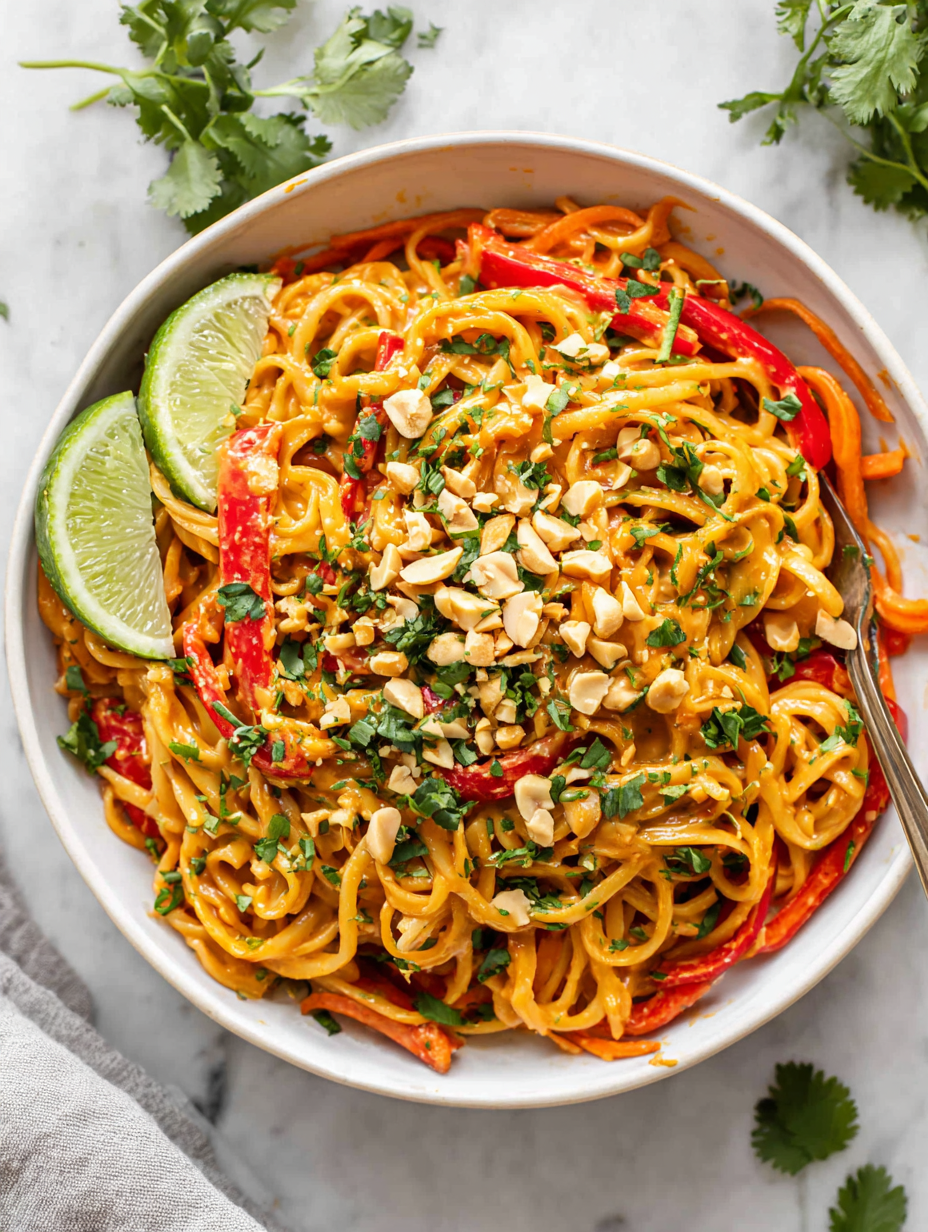
Vegan Peanut Noodles
Ingredients
Equipment
Method
- Bring a large pot of salted water to a rolling boil and cook the noodles until just al dente, about 8-10 minutes. Drain and rinse with cold water to stop the cooking, then set aside.
- In a small bowl, whisk together the peanut butter, soy sauce, lime juice, maple syrup, sesame oil, and rice vinegar until smooth and glossy. This creates your rich, flavorful sauce.
- If desired, warm a splash of sesame oil in a skillet over medium heat and sauté minced garlic or ginger for about 30 seconds until fragrant, adding depth to the sauce. Let it cool briefly.
- Pour the sauce over the drained noodles in a large mixing bowl. Use tongs or chopsticks to gently toss, ensuring each strand is coated with the sauce and glistening.
- Transfer the coated noodles to a serving bowl. Sprinkle generously with toasted sesame seeds and fresh herbs like scallions or cilantro for added flavor and color.
- Let the noodles sit for a couple of minutes to absorb the flavors. Serve warm or at room temperature, enjoying the creamy, nutty, and tangy flavors in every bite.
Notes
Pro tips for perfect peanut noodles
- Use warm water to loosen thick peanut sauce—makes mixing easier.
- Toast your sesame seeds before sprinkling—adds a smoky, nutty aroma.
- Use tongs for tossing noodles—keeps them intact and evenly coated.
- Adjust sauce thickness by adding a splash of warm water—avoid clumping.
- Keep an eye on the heat when sautéing aromatics—burnt garlic ruins the flavor.
- Rinse cooked noodles in cold water—stops cooking and prevents sticking.
- Taste and adjust soy or lime before serving—balance the salty, tangy, and sweet flavors.
Common mistakes and how to fix them
- FORGOT to check noodle doneness → Always taste for al dente texture.
- DUMPED sauce too quickly → Toss gently to coat evenly, avoid clumping.
- OVER-TORCHED sesame oil → Use medium heat, keep a close eye on aroma and color.
- MISSED measuring oil → Measure precisely to balance richness and prevent greasiness.
Quick fixes and pantry swaps
- If sauce is too thick, splash in warm water and stir until silky.
- When noodles stick, toss in hot water briefly to loosen them.
- Splash soy sauce if flavor is bland or needs saltiness boost.
- Patch overcooked noodles with a quick stir in a hot, oiled pan.
- Shield from burning oil—keep heat moderate and stir frequently.
Prep, store, and reheat tips
- Prep the sauce ahead by mixing it thoroughly; it keeps well in the fridge for up to 3 days, with flavors intensifying slightly overnight.
- Cook noodles in advance, drain, and rinse with cold water; store in an airtight container for up to 2 days. Reheat briefly in hot water or microwave, watching for over-softening.
- Storing leftovers in a sealed container in the fridge will keep for about 2 days. Expect the sauce to thicken—stir in a splash of warm water to loosen before serving.
- Reheat gently: warm the noodles in a skillet over medium heat or microwave in short bursts. Add a tiny bit of water or broth to restore moisture and maintain a tender bite. The aroma should be peanutty and inviting, with a glossy sheen on the noodles.
Top questions about vegan peanut noodles
1. Can I use chunky peanut butter?
Use natural, unsweetened peanut butter for a rich, creamy sauce. Chunky adds texture, but smooth blends better.
2. Can I substitute soy sauce?
Yes, soy sauce is traditional, but coconut aminos give a milder, slightly sweeter flavor if you prefer a soy-free version.
3. Is fresh lime necessary?
Lime juice brightens the dish with a citrusy zing. Fresh squeezed is best, but bottled lime works in a pinch.
4. How do I know when noodles are done?
Cook noodles until just tender, about 8-10 minutes. Taste-test for al dente—firm but not hard in the center.
5. Can I make the sauce in advance?
You can prep the sauce a day ahead in the fridge. Just stir well before mixing with noodles.
6. My sauce is too thick, what now?
If the sauce thickens, thin it with a splash of warm water or broth until smooth and glossy.
7. Should I toast the sesame seeds?
Toasting sesame seeds enhances their nutty aroma. Do it in a dry skillet over medium heat until fragrant and golden.
8. How can I mix the noodles without breaking them?
Use tongs or chopsticks to gently toss noodles with sauce for even coating without breaking them.
9. How long do leftovers last?
Store leftovers in an airtight container in the fridge for up to 2 days. Reheat gently in the microwave or skillet.
10. What if I forget to add lime?
If you forgot to add lime, squeeze fresh over the dish just before serving for a burst of brightness.
This dish is a reminder that comfort food can be simple, accessible, and packed with nostalgic flavor. It’s perfect for those days when you want something hearty but not heavy, with a burst of familiar, peanutty warmth. Plus, it’s a quick fix that makes you feel like you’re giving yourself a little hug in a bowl.
No matter how often I make these noodles, they always seem to bring a little moment of calm and joy. It’s one of those recipes I turn to when I need a break from fuss but still crave something satisfying and honest. Sometimes, that’s exactly what a busy week needs.

Hi, I’m Harper Evans. Welcome to Crushing These Flavors, my home on the internet where curiosity, comfort, and a deep love for food come together. I’m a passionate food blogger who believes great meals are built through attention, practice, and a willingness to experiment.