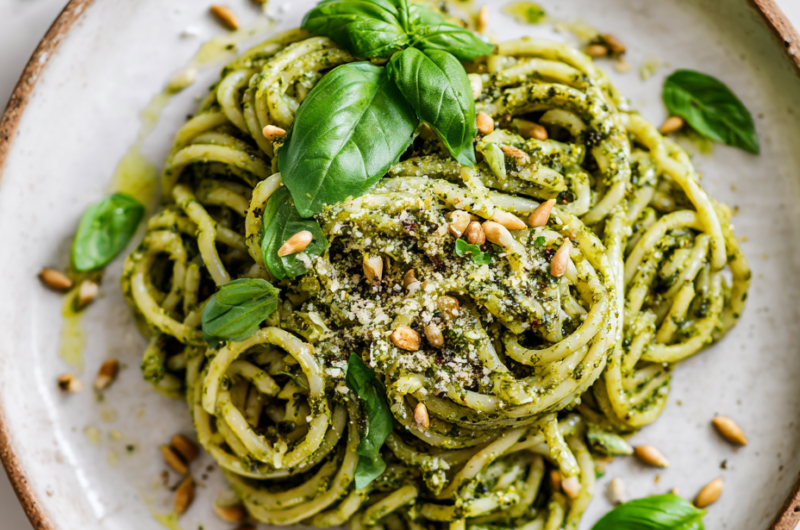
This vegan pesto pasta idea came from a need to shake up my usual recipes with something unexpected but still comforting. I started experimenting with roasted sunflower seeds instead of pine nuts—something that gives a richer, nuttier flavor without breaking the bank or relying on traditional ingredients. It’s a bit of a sensory gamble every time I make it, but the payoff is a vibrant, smoky pesto that clings beautifully to al dente pasta.
Using fresh herbs from the garden, like basil and parsley, adds a bright, aromatic punch that makes the whole dish feel alive and fresh. It’s a recipe born from chaos—my small kitchen, a handful of ingredients, and a stubborn desire to make something both simple and complex. Each bite carries a whisper of summer, even in the depths of winter, thanks to those bold, herby notes.
Focusing on how to create a deeply flavorful vegan pesto using unexpected ingredients, like roasted sunflower seeds and fresh herbs from the garden, turning a simple pasta dish into a sensory adventure that surprises both in taste and texture.
The story behind this recipe
- This recipe was born out of a summer garden mess-up. I had an overload of basil and a handful of sunflower seeds that needed using. Instead of the usual pesto, I tossed everything into my blender, hoping for the best, and it turned into something unexpectedly smoky and vibrant.
- I love how this dish feels like a little rebellion—vegan, simple, yet packed with flavor that’s not typical. It’s a reminder that sometimes, improvising in the kitchen leads to the most memorable meals. Plus, it’s a dish I turn to when I want something fresh and satisfying without fuss.
- A sudden burst of inspiration one lazy afternoon, blending herbs and seeds until it felt just right. It’s a recipe that captures those spontaneous kitchen moments, where everything comes together in a rush of smell and color.
Ingredient breakdown: key components
- Sunflower seeds: I love their buttery richness, but for a milder flavor, try cashews or almonds—just watch the texture become creamier.
- Fresh basil: The aroma hits like a summer breeze, so don’t skimp—use fresh, vibrant leaves for that punch of herby brightness.
- Garlic: I prefer roasted for depth, but raw gives a sharper bite—adjust based on your garlic love or tolerance.
- Olive oil: The key to smoothness; opt for a good extra virgin—your pesto will thank you with a silky, lush feel.
- Lemon juice: Brightens everything with a zing—skip it if you want less tang, but trust me, it lifts the whole dish.
- Nutritional yeast: Adds cheesy umami without dairy—if you don’t have it, a pinch of miso can mimic that depth.
- Salt and pepper: I find a pinch of sea salt enhances all those flavors—season carefully, then taste before adding more.
Spotlight on key ingredients
Sunflower seeds:
- I love their buttery richness, but for a milder flavor, try cashews or almonds—just watch the texture become creamier.
- Fresh basil: The aroma hits like a summer breeze, so don’t skimp—use fresh, vibrant leaves for that punch of herby brightness.
- Garlic: I prefer roasted for depth, but raw gives a sharper bite—adjust based on your garlic love or tolerance.
Fresh basil:
- Its bright, aromatic punch makes the dish feel alive. Use fresh, vibrant leaves—dried basil won’t cut it here.
- Olive oil: The key to silky pesto—go for good-quality extra virgin; it makes a real difference in flavor and texture.
- Lemon juice: Adds a zesty brightness that lifts the pesto. Freshly squeezed is best, but bottled works in a pinch.
Notes for ingredient swaps
- Nuts & Seeds: Sunflower seeds are mild and buttery, but almonds or cashews will add creaminess and a richer flavor—just watch the texture for smooth blending.
- Herbs: Basil is classic, but parsley or cilantro can bring a fresh twist, though it will alter the flavor profile noticeably.
- Garlic: Raw garlic provides sharpness, roasted garlic adds depth—use whichever suits your mood or pantry stock.
- Oil: Extra virgin olive oil makes a silky pesto; for a different note, try avocado oil for a milder, buttery finish.
- Acid: Lemon juice brightens everything; lime or a splash of vinegar can be good substitutes if you prefer a different tang.
- Nutritional Yeast: Adds cheesy umami; if missing, a small spoonful of miso paste can mimic that savory depth.
- Salt & Pepper: Adjust according to your taste; sea salt enhances all flavors, while smoked pepper adds a subtle smoky undertone.
Equipment & Tools
- Large pot: Boiling pasta efficiently in plenty of water.
- Blender: Pureeing the pesto ingredients into a smooth sauce.
- Skillet: To toast sunflower seeds and develop smoky flavor.
- Measuring spoons: Ensuring accurate seasoning and lemon juice.
- Ladle: Reserving pasta water and mixing pesto evenly.
Step-by-step guide to vegan pesto pasta
- Gather all equipment: blender for pesto, large pot for pasta, skillet for finishing. Have everything within reach to keep the flow smooth.
- Boil water in a large pot, about 4-5 liters, seasoned with a generous pinch of salt. Bring to a rolling boil at 100°C (212°F).
- Add pasta—about 250g (8 oz) of your favorite shape. Stir immediately to prevent sticking. Cook until al dente, 8-10 minutes, until firm but tender.
- While pasta cooks, prepare the pesto. In a dry skillet over medium heat (about 160°C/320°F), toast sunflower seeds until golden and fragrant, about 3-4 minutes. Shake often to prevent burning.
- In your blender, combine toasted sunflower seeds, a packed cup of fresh basil, 2 cloves garlic (roasted or raw, as preferred), 2 tbsp lemon juice, 3 tbsp olive oil, 2 tbsp nutritional yeast, salt, and pepper. Blend until smooth. If too thick, add more olive oil or a splash of water to loosen.
- Check the pasta for doneness—bite should be firm but not chalky. Drain quickly, reserving a cup of pasta water.
- Toss hot pasta with pesto in the large pot or a mixing bowl. Add reserved pasta water a little at a time to loosen the sauce if needed. Mix until evenly coated and glossy.
- Taste and adjust seasoning—more lemon, salt, or pepper if needed. The pesto should be vibrant, fragrant, and clingy.
- Finish by transferring to plates, garnishing with a drizzle of olive oil or extra basil if desired. Serve immediately for best flavor and texture.
Serve immediately while hot, garnish with extra herbs if desired. No need to rest—just enjoy right away for the freshest flavor and best texture.
How to Know It’s Done
- Pasta: Al dente, with a slight chew.
- Pesto: Bright, smooth, and fragrant with toasted nut aroma.
- Pasta coating: Glossy and evenly coated, not clumped.
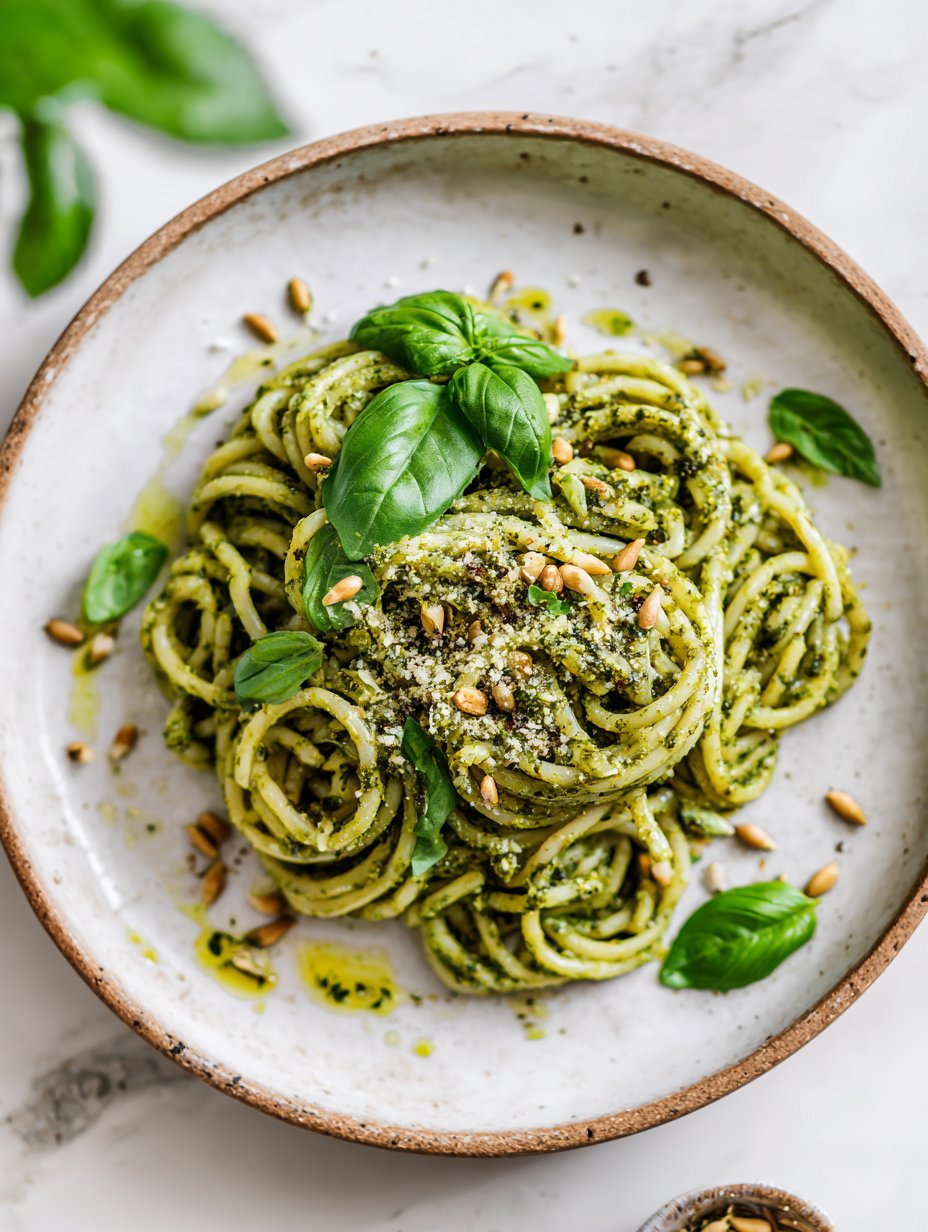
Vegan Sunflower Seed Pesto Pasta
Ingredients
Equipment
Method
- Bring a large pot of salted water to a rolling boil, then add your pasta. Cook until al dente, about 8-10 minutes, until it has a slight firmness when bitten. Drain and set aside.
- While the pasta cooks, heat a skillet over medium heat. Toast the sunflower seeds until they turn golden brown and release a nutty aroma, about 3-4 minutes. Shake the pan frequently to prevent burning.
- In your blender, combine the toasted sunflower seeds, fresh basil leaves, garlic, lemon juice, olive oil, and nutritional yeast. Blend until smooth and creamy, stopping to scrape down the sides if needed. If the mixture is too thick, add a splash of water or more olive oil to loosen it.
- Taste the pesto and season with salt and pepper. Adjust the lemon juice or seasoning as desired for brightness and balance.
- Transfer the cooked pasta back into the large pot or a mixing bowl. Pour the freshly blended pesto over the hot pasta and toss gently to coat evenly. If the pesto is too thick, add a little reserved pasta water to achieve a silky, glossy sauce.
- Serve immediately, garnished with extra fresh herbs or a drizzle of olive oil if desired. The pasta should be vibrant, fragrant, and coated in a smooth, herby pesto. Enjoy!
Pro tips for perfect vegan pesto
- Toasted Seeds: Lightly toast sunflower seeds until golden and fragrant—this step enhances their nutty flavor and adds depth to your pesto.
- Blending Technique: Blend the ingredients until just smooth; over-blending can make the pesto greasy and lose texture.
- Pasta Water: Reserve a splash of pasta cooking water; its starchy goodness helps loosen and emulsify the pesto for a silky coat.
- Flavor Boost: Add lemon juice gradually, tasting as you go—this brightens the pesto without overpowering the herbs.
- Adjusting Consistency: If pesto feels thick, stir in a little more olive oil or reserved pasta water to achieve a creamy, clingy sauce.
- Seed Toasting: Keep a close eye while toasting seeds—burnt sunflower seeds turn bitter quickly, so shake the pan often.
- Salt Control: Season the pesto with salt carefully; it amplifies flavors and balances the nuttiness and herb brightness.
Common mistakes and how to fix them
- FORGOT to toast sunflower seeds? Lightly toast until golden and fragrant—avoid burning.
- DUMPED in too much oil? Add a splash of water to loosen the pesto without overpowering flavor.
- OVER-TORCHED seeds? Lower heat immediately and stir constantly to prevent bitterness.
- MISSED the salt? Season gradually, tasting as you go, for balanced flavor.
Quick fixes and pantry swaps
- When sauce is too thick, splash in water and blend briefly for a smoother texture.
- If pesto tastes bland, splash with lemon juice and a pinch more salt.
- Splash a bit of olive oil if pesto feels too stiff or crumbly during mixing.
- Patch burnt sunflower seeds with a handful of fresh seeds and toast again gently.
- Shield over-torched seeds by quickly lowering heat and stirring constantly for even toasting.
Prep, store, and reheat tips
- Prep the pesto up to 2 days in advance; store in an airtight container in the fridge. The vibrant basil aroma will intensify overnight.
- Cook the pasta al dente, then toss with a little olive oil to prevent sticking. Keep refrigerated for up to 24 hours; reheating will revive its texture.
- For best flavor, add the pesto just before serving. If stored separately, the pesto may darken slightly but will still taste fresh.
- Reheat leftovers gently in a warm pan or microwave; add a splash of water or olive oil to loosen the sauce. Expect the aroma to be slightly muted but still lively.
Top questions about vegan pesto pasta
1. Can I substitute sunflower seeds?
Use sunflower seeds for a mild, buttery flavor; you can swap with cashews or almonds for creaminess. Toast them first to bring out their nutty aroma.
2. Can I use other herbs instead of basil?
Yes, fresh basil is key for that bright, aromatic punch. Parsley or cilantro can work, but they change the flavor significantly.
3. Should I use raw or roasted garlic?
Roasted garlic adds depth and smoky notes, but raw garlic gives a sharper, more pungent flavor. Adjust to your preference.
4. What oil is best for the pesto?
Extra virgin olive oil makes the pesto silky and rich. For a milder taste, try avocado oil, but it will alter the flavor slightly.
5. Can I skip lemon juice?
Lemon juice brightens the pesto with a zesty kick. Lime juice or a splash of vinegar can be used as alternatives.
6. What’s a good substitute for nutritional yeast?
Nutritional yeast adds cheesy umami without dairy. If you don’t have it, a small spoonful of miso paste can mimic that depth.
7. How do I know when the pasta is ready?
Cook the pasta until al dente, about 8-10 minutes. It should be firm but tender, not mushy.
8. Why save pasta water?
Reserve some pasta water before draining. It’s starchy and helps loosen the pesto if it thickens too much.
9. How do I fix bland pesto?
Taste and adjust seasoning—more lemon, salt, or pepper—until the pesto is vibrant and well-balanced.
10. Can I make this ahead?
Serve immediately for the freshest flavor and best texture. If needed, reheat gently, adding a splash of water or oil.
This dish is a reminder that simple ingredients, when combined thoughtfully, can create something unexpectedly vibrant and satisfying. It’s perfect for those days when you want quick comfort with a twist of freshness. The smoky sunflower seed pesto adds a depth that keeps me coming back, even on busy weeknights.
Sharing this recipe feels like passing along a small secret—something that transforms a humble plate into a moment of real, honest flavor. It’s a dish that celebrates improvisation and the little surprises in everyday cooking. No matter how often I make it, it always feels like a small victory.

Hi, I’m Harper Evans. Welcome to Crushing These Flavors, my home on the internet where curiosity, comfort, and a deep love for food come together. I’m a passionate food blogger who believes great meals are built through attention, practice, and a willingness to experiment.