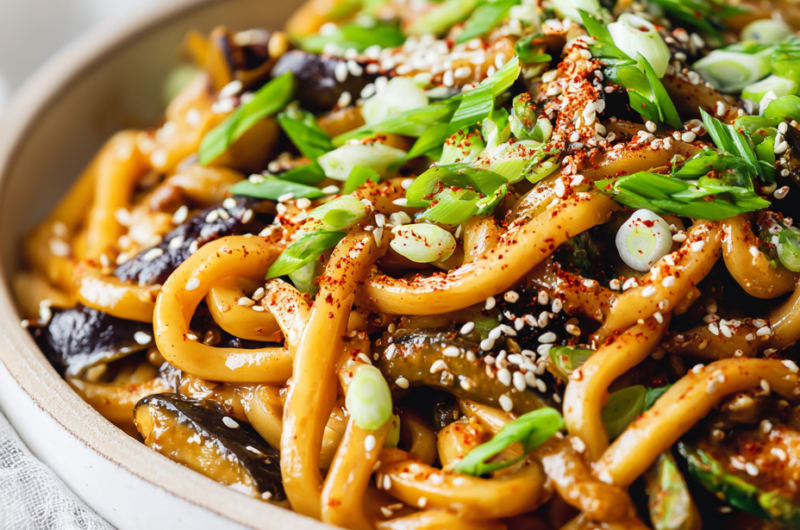
Vegan udon noodles often get a bad rap as being just simple comfort food, but I’ve found a way to elevate them into something deeply smoky and satisfying. The key is in making a miso broth that mimics the richness of traditional ramen, but all plant-based. It’s like capturing a nostalgic flavor without relying on any animal products, which feels especially comforting during chilly evenings or when you crave that umami punch without the heaviness.
This recipe is about playing with smoky layers—think toasted miso, a splash of sesame oil, and a touch of smoked paprika—to create a broth that’s complex and warm. The noodles soak up all those flavors, turning plain udon into a bowl that feels indulgent but is actually light and nourishing. It’s a small way to turn a humble dish into something special, especially when you want to surprise someone with how much flavor you can pack into a simple bowl.
Focusing on how to elevate vegan udon noodles with a smoky miso broth that mimics traditional ramen, giving a comforting depth to a plant-based dish.
Story Behind This Dish
- This dish was born out of a rainy Sunday craving something warm but still fresh and quick. I had a pack of udon in the fridge and a jar of miso that needed using up. The smoky twist came from a moment of kitchen chaos — accidentally toasting miso a little too dark, but it turned out to be exactly what it needed.
- I started playing with the idea of deep umami layered with smoky undertones, something that could lift simple noodles into comfort territory without feeling heavy. Over the years, I’ve kept tweaking it, adding little touches like toasted sesame oil, and now it’s become my go-to when I want something quick, satisfying, and a little unexpected.
- heading
- Story Behind This Dish
Ingredient breakdown: key components
- Udon noodles: I prefer fresh, chewy udon for their satisfying bite and ability to soak up broth. If you only have dried, just add an extra minute to cooking.
- Miso paste: I use a dark, toasted miso for a smoky depth, but white miso can brighten the broth if you want a milder, sweeter touch.
- Sesame oil: Toasted sesame oil adds a nutty aroma that really elevates the flavor. Use sparingly if you want a subtler background note.
- Vegetable broth: I opt for homemade or low-sodium store-bought, but mushroom broth can add an earthy umami if you want extra richness.
- Smoked paprika: It’s my secret weapon for that smoky edge. If you don’t have it, a dash of liquid smoke or smoked salt works too—just start small.
- Green onions: Freshly sliced, they bring a crisp, oniony brightness. For crunch and color, add them just before serving.
- Optional toppings: Tofu, nori, or a soft boiled egg make this bowl feel complete, but keep it simple if you want pure flavor focus.
Spotlight on key ingredients
Udon noodles:
- I love their chewy, thick texture that soaks up broth beautifully. Use fresh if you can for the best chew and flavor, but dried works in a pinch—just add an extra minute to cooking.
- Miso paste: I prefer a dark, toasted miso for that deep, smoky richness. If you want something brighter and sweeter, white miso is a good alternative, but it softens the smoky depth.
Smoked paprika:
- It’s my secret for adding that smoky punch. It’s vibrant and fiery in aroma, and when it hits hot broth, it releases a smoky, slightly sweet scent that makes everything feel cozy. If you don’t have it, a dash of liquid smoke or smoked salt can do the trick—just start small and taste.
- ingredient
Notes for ingredient swaps
- Broth Base: Use mushroom broth instead of vegetable for an earthier, more robust flavor. It adds a meaty richness without meat.
- Miso Paste: Swap dark toasted miso for white miso if you prefer a sweeter, milder broth. It keeps things light and bright.
- Oil: Try avocado oil instead of sesame for a neutral, high-heat option that won’t overpower the smoky notes. Expect a subtler nutty aroma.
- Noodles: Rice noodles can replace udon if you want a gluten-free option. They soak up broth quickly but tend to be softer.
- Smoked Flavor: Liquid smoke or smoked salt can stand in for smoked paprika if you’re out. Use sparingly to avoid overpowering the broth.
- Toppings: Tofu can be replaced with tempeh or seitan for different textures—just pan-fry until crispy for contrast.
- Green Onions: Chives or scallions offer a different bite but still add that fresh, oniony punch at the end.
Equipment & Tools
- Large pot: Boil the noodles quickly and efficiently.
- Wok or deep skillet: Create a smoky, flavorful broth and sauté aromatics.
- Tongs: Handle and toss the noodles without breaking them.
- Measuring cup: Ensure accurate broth and ingredient quantities.
Step-by-step guide to vegan udon
- Gather all your equipment: a large pot for boiling, a wok or deep skillet for stir-frying, tongs for handling noodles, and a measuring cup. Prepare your workspace so everything is within reach.
- Cook the udon noodles: Bring a large pot of water to a rolling boil (about 100°C/212°F). Add noodles and cook for 3-4 minutes, just until tender but still chewy. Drain and rinse under cold water to stop cooking and keep them firm.
- Make the smoky broth: In your wok or skillet, heat 1 tablespoon of toasted sesame oil over medium heat (around 160°C/320°F). Add 2 tablespoons of miso paste and toast for about 1 minute, stirring constantly until fragrant and slightly darkened. Carefully pour in 2 cups of vegetable broth, stirring to dissolve miso completely. Add 1 teaspoon smoked paprika and bring to a gentle simmer, about 5 minutes.
- Adjust broth flavor: Taste and add a splash more miso or smoked paprika if needed. If the broth seems too thick, thin it with a little hot water. Keep warm on low heat.
- Fry aromatics (optional): In the same pan, add 1 teaspoon of sesame oil and sauté sliced green onions and a few slices of garlic until fragrant, about 1 minute. For added smoky flavor, toss in a pinch of smoked salt or a dash of liquid smoke, if using.
- Combine noodles and broth: Add the cooked udon to the broth, tossing gently to coat. Let them soak up the flavors for about 1-2 minutes, until heated through. Check that the noodles are hot and the broth is steaming.
- Serve immediately: Divide the noodles and broth into bowls. Garnish with fresh sliced green onions, nori strips, or tofu cubes if desired. Serve hot and enjoy the smoky, umami-rich flavors.
- Rest and plate: Let the noodles sit for a minute to settle, then add extra toppings if you like. Present with a sprinkle of sesame seeds or a squeeze of lemon for brightness.
Serve immediately while hot. Garnish with fresh toppings like green onions, nori, or tofu. Let the noodles rest for a minute to absorb flavors before eating.
How to Know It’s Done
- Noodles are chewy and not overcooked, with a slight bounce when bitten.
- Broth is rich, smoky, and well-balanced, with no raw miso taste.
- Green onions and toppings are fresh, vibrant, and add contrast to the warm dish.
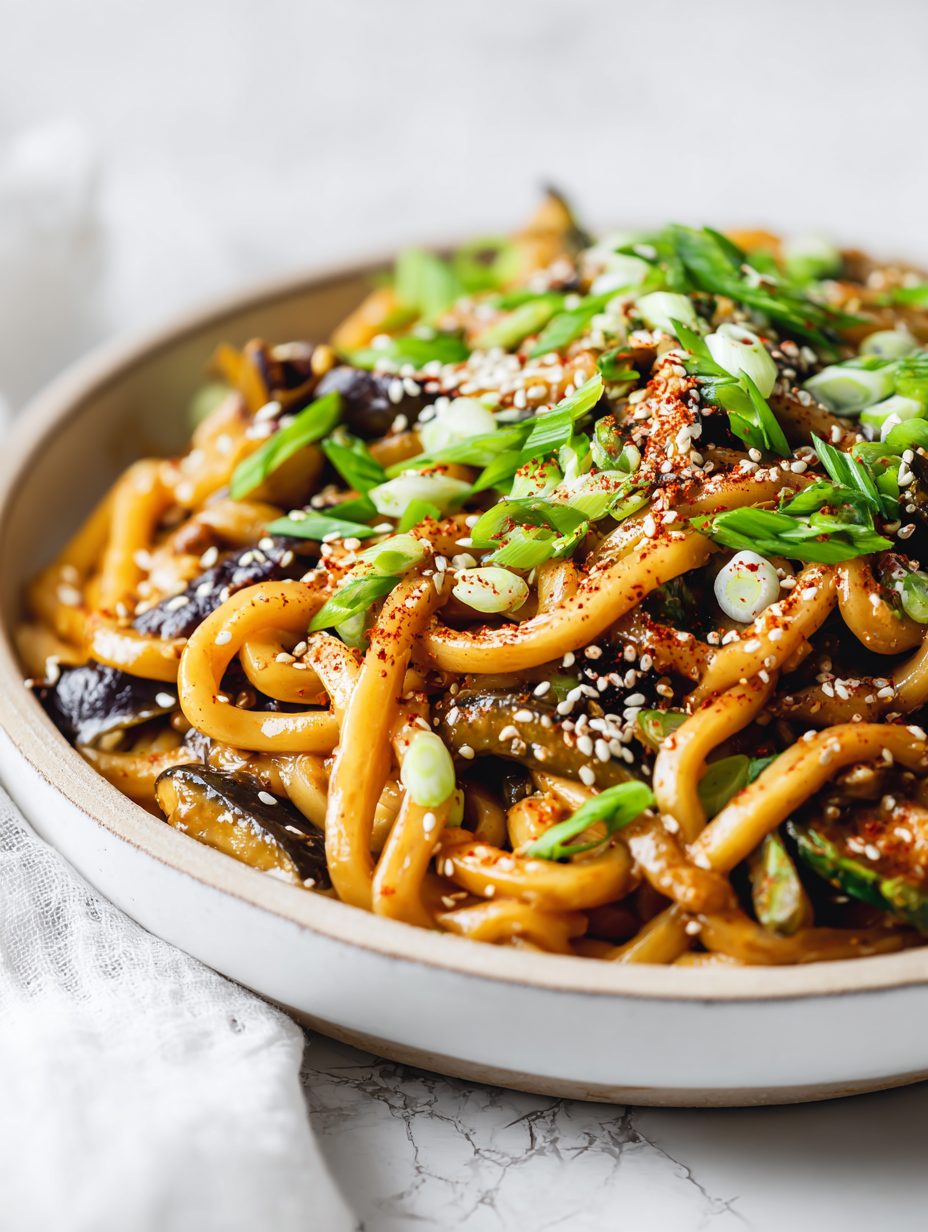
Smoky Vegan Udon Noodles
Ingredients
Equipment
Method
- Bring a large pot of water to a rolling boil, then add the fresh udon noodles. Cook for about 3-4 minutes until just tender and chewy, then drain and rinse under cold water to stop the cooking. Set aside.
- In your wok or deep skillet, heat 1 tablespoon of toasted sesame oil over medium heat until fragrant and shimmering. Add the dark miso paste and toast, stirring constantly, for about 1 minute until it darkens slightly and releases a nutty aroma.
- Carefully pour in 2 cups of vegetable broth, stirring constantly to dissolve the miso completely. Bring the mixture to a gentle simmer, then stir in 1 teaspoon of smoked paprika. Let the broth simmer gently for about 5 minutes, allowing flavors to meld and the broth to thicken slightly.
- Taste the broth and adjust with a little more miso or smoked paprika if desired. Once seasoned to your liking, add the cooked udon noodles directly into the skillet, tossing gently to coat and soak up the smoky broth. Let them simmer together for 1-2 minutes until hot and flavorful.
- Meanwhile, slice the green onions thinly, then add them to the broth for a fresh, crisp contrast. If using optional toppings like tofu or nori, prepare or chop them now for garnish.
- Divide the noodles and smoky broth into serving bowls. Garnish with additional sliced green onions, nori strips, or tofu slices if desired. Serve immediately while steaming hot, enjoying the glossy, flavorful broth and chewy noodles.
Notes
Tips & tricks for best results
- Toast miso until fragrant and darkened—this unlocks smoky, nutty notes that deepen the broth.
- When boiling noodles, stir gently to prevent sticking and cook just until chewy—avoid overdoing it for perfect bite.
- Sauté aromatics over medium heat until fragrant and slightly sizzling—this releases their full flavor without burning.
- Add smoked paprika in the final simmer—this keeps the smoky aroma vibrant and not muted by prolonged heat.
- Taste broth before serving—adjust miso or smoked spice in small increments for balanced depth.
- Rinse cooked udon in cold water after boiling—this stops cooking and keeps them chewy and ready to soak up flavors.
- Garnish immediately with fresh green onions or nori—this preserves their brightness and crisp texture.
Common mistakes and how to fix them
- FORGOT to adjust heat: Broth should simmer gently, not boil vigorously, to avoid bitterness.
- DUMPED too much miso: Add gradually, tasting to prevent overpowering the smoky flavor.
- OVER-TORCHED miso: Toast until fragrant and darkened, but stop before it becomes burnt and bitter.
- SKIPPED rinsing noodles: Rinse after boiling to stop cooking and keep them chewy and firm.
Quick fixes and pantry swaps
- If sauce is too thick, splash in hot water and stir until shimmer returns.
- When noodles stick, dump them into boiling water again, then rinse thoroughly.
- Splash a little rice vinegar if broth feels flat and needs brightness.
- Patch over-salted broth with a squeeze of lemon or a pinch of sugar.
- Shield burning miso by lowering heat immediately and adding more broth for dilution.
Prep, store, and reheat tips
- Cook the udon noodles ahead: rinse thoroughly and store in an airtight container in the fridge for up to 2 days. They will be chewier when reheated, so handle gently.
- Prepare the broth in advance: make the smoky miso broth and keep it in the fridge for up to 3 days. Reheat gently on the stove until steaming and fragrant.
- Store toppings separately: sliced green onions, nori, and tofu can be prepped and kept in the fridge for up to 2 days. Add just before serving to maintain freshness.
- Reheat leftovers carefully: warm the noodles and broth separately over low heat. Noodles may soften slightly; add a splash of hot water or broth if needed. Expect a slightly muted smoky aroma, but it still tastes rich and comforting.
- Flavor may mellow over time: after storing, the broth’s smoky notes might soften. Taste and adjust with a pinch of smoked paprika or miso before serving again.
Top questions about vegan udon noodles
1. Can I use dried udon instead of fresh?
Use fresh or dried udon depending on what’s available. Fresh has a chewier texture, while dried is convenient and still good after a quick boil.
2. Can I substitute white miso for toasted miso?
Yes, white miso will give a milder, slightly sweeter broth that’s less smoky than toasted miso, but still delicious.
3. How do I get a smoky flavor in the broth?
Toast the miso longer until it’s dark and fragrant to really bring out that smoky, nutty flavor.
4. How much smoked paprika should I add?
Add smoked paprika gradually, tasting as you go. It’s potent and a little goes a long way.
5. Should I rinse the noodles after boiling?
Rinse cooked noodles in cold water to stop the cooking process and keep them chewy and firm.
6. How do I reheat the noodles without losing flavor?
Reheat leftovers gently over low heat, adding a splash of water or broth if they seem dry or muted.
7. When should I add toppings?
Add toppings just before serving to keep them fresh and crisp, especially green onions and nori.
8. Can I substitute the broth?
Use mushroom broth or a splash of soy sauce for extra umami if you don’t have vegetable broth.
9. How can I boost the smoky flavor?
For a richer broth, include a small piece of toasted seaweed or a drop of liquid smoke.
10. How do I know if my broth is seasoned right?
Adjust the seasoning gradually, tasting as you go, especially when adding miso or smoked spices.
This vegan udon noodle bowl isn’t just about simple comfort; it’s about capturing a smoky, layered flavor that feels indulgent yet nourishing. When I make it, I love the way the broth’s deep umami aroma fills the kitchen and pulls me in for another bite. It’s a reminder that plant-based dishes can be rich, satisfying, and deeply satisfying in their own right.
In the end, it’s these little tweaks—a touch of toasted miso, smoky paprika, fresh green onions—that turn everyday ingredients into something memorable. Sometimes, a quick stir and a few simple toppings are all it takes to create a meal that feels both cozy and special, especially on busy weeknights or when I want something warm and soul-satisfying.

Hi, I’m Harper Evans. Welcome to Crushing These Flavors, my home on the internet where curiosity, comfort, and a deep love for food come together. I’m a passionate food blogger who believes great meals are built through attention, practice, and a willingness to experiment.