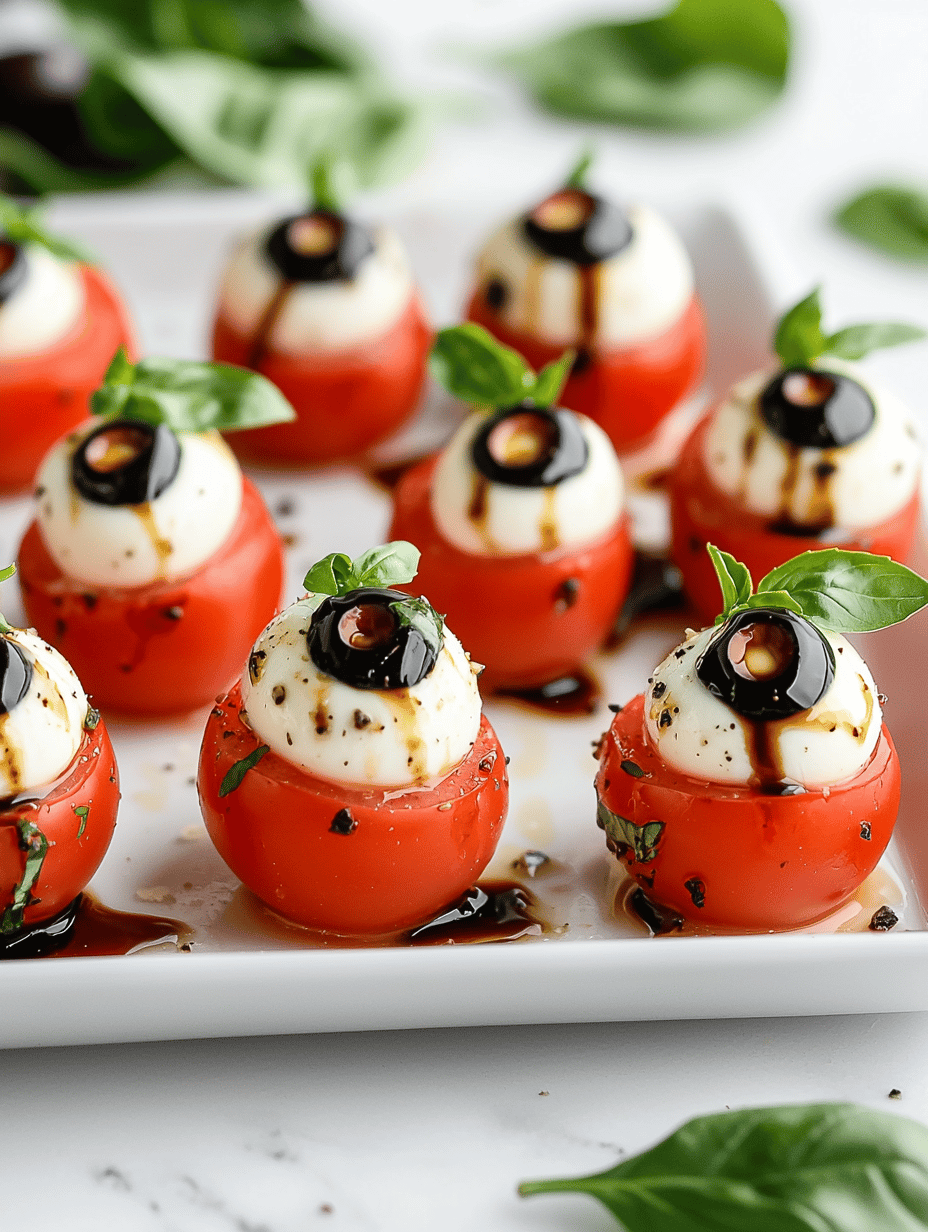
Halloween is not just about spooky costumes and haunted houses; it’s also about clever, creepy food that sparks conversation. These Eyeball Caprese Bites turn a simple appetizer into a playful, monstrous treat that’s as fun to make as it is to eat. The combination of fresh mozzarella and cherry tomatoes, topped with a daring projection of basil and black olive “pupils,” creates a surreal, grotesque effect.
When I first saw the idea, I loved how this dish combines the elegance of a classic Caprese with a dash of horror. It’s perfect for parties and adds an unexpected twist to your annual spooky spread. Plus, it’s surprisingly quick to assemble, so no late-night chaos needed to impress your guests.
Eyeball Caprese Bites
Ingredients
Equipment
Method
- Skim the basil leaves and set aside; these will be used for the 'eyeball' detail.
- Take each cherry tomato and wash thoroughly. Place a cherry tomato next to a mozzarella ball for assembly.
- Using a small skewer or toothpick, spear a mozzarella ball followed by a cherry tomato, assembling them into a mini skewered bite.
- Repeat with all mozzarella balls and cherry tomatoes until you have 12 assembled bites.
- Place each skewer on a serving platter. Top each mozzarella with a small basil leaf to resemble an eyeball’s sclera.
- Using a small piece of black olive, attach a tiny pupil in the center of the basil leaf to create the creepy eyeball effect.
- Optional: Drizzle a small amount of olive oil over the assembled eyeballs for shine and flavor. Add a pinch of salt if desired.
- Serve immediately as a fun, spooky appetizer that’s visually striking and delicious.
Enjoy the process of creating these tiny monsters and see horror meet culinary art in the most delightful way. They’re a burst of seasonal fun that’s sure to keep everyone guessing what spooky dish is coming next.

Hi, I’m Harper Evans. Welcome to Crushing These Flavors, my home on the internet where curiosity, comfort, and a deep love for food come together. I’m a passionate food blogger who believes great meals are built through attention, practice, and a willingness to experiment.