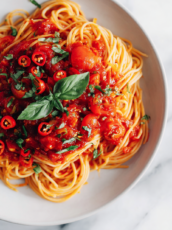
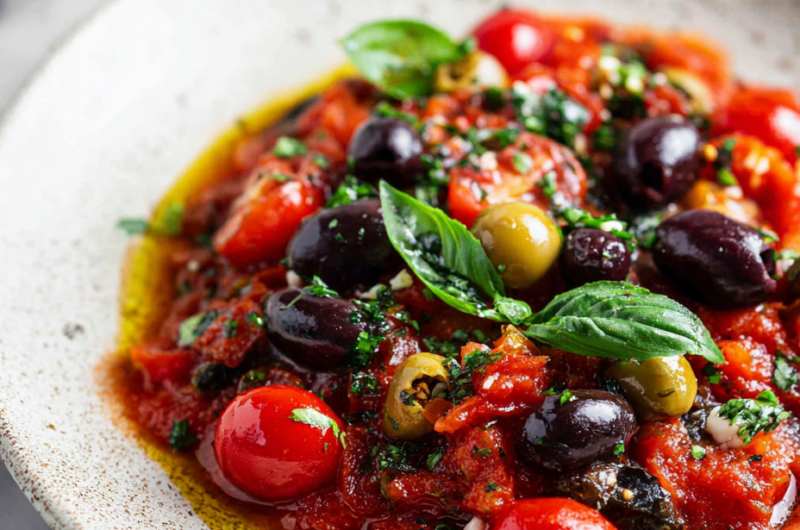
This vegan Puttanesca is a lifesaver when you need dinner fast but still want something deeply satisfying. It’s basically pantry magic—olives, capers, and tomatoes—all coming together in one pan, no fuss. I love how it turns simple ingredients into a bold, briny sauce that’s perfect over pasta or even cauliflower rice for a lighter twist.
What makes this dish special isn’t just the speed—it’s how flexible it is. Got canned tomatoes, a jar of olives, and some capers? You’re set. It’s a reminder that you don’t need fancy ingredients or hours of prep to make a meal that feels like a treat, especially on those busy weeknights when time’s tight and energy’s low.
Focusing on how this vegan Puttanesca can be a quick, pantry-staple dinner that transforms simple ingredients into something unexpectedly rich and satisfying, perfect for busy weeknights or last-minute cravings.
The story behind this recipe
- This recipe was born out of a chaotic week when I only had a handful of pantry staples and a craving for something punchy and comforting. I remembered how my nonna used to toss together simple, briny pasta sauces from whatever was lying around, no fuss, just bold flavors. That memory stuck with me, especially when I realized how easily I could veganize her classic puttanesca with just a few tweaks.
- I like to think of this dish as a little rebellion against the usual quick dinners. It’s a reminder that even in the busiest moments, a splash of good olive oil, some olives, and capers can transform a simple tomato base into something that’s unexpectedly rich and satisfying. It’s my go-to when I want comfort without the hassle.
- story_type
- paragraph
Key Ingredient Insights
- Canned cherry tomatoes: I love the burst of sweetness and acidity they bring, but you can swap with fresh if you prefer a brighter, less cooked flavor.
- Kalamata olives: These give the dish that deep, smoky brine. Use pitted, sliced olives for convenience, or try green olives for a slightly milder tang.
- Capers: They pack a punch of salty, tangy flavor that’s essential here. Rinse them well if you want to tone down the saltiness a bit.
- Garlic: I mash mine to release a mellow, nutty aroma, but thin slices add a sharper punch—try both and see what works.
- Olive oil: The good stuff makes a difference—look for extra virgin, and drizzle it in at the end to keep that fresh, fruity aroma alive.
- Dried chili flakes: A pinch adds a smoky heat that ties everything together. Adjust to your spice tolerance; start small and build.
- Pasta (or cauliflower rice): I prefer a sturdy spaghetti, but this sauce also shines over zucchini noodles or even roasted potatoes for a twist.
Spotlight on key ingredients
Kalamata olives:
- Their smoky, briny punch is what makes this dish stand out. I love how they soften and release their deep flavor as they cook.
- Olive oil: The good stuff brings a fruity aroma and silky texture. I always drizzle extra virgin at the end for that fresh, fragrant finish.
Capers:
- Canned cherry tomatoes: They burst with sweet acidity, releasing a bright, tangy aroma that lifts the sauce. If using fresh, chop and cook longer for that juicy burst.
- These little salty bursts add a tangy punch. Rinse them well so they don’t overpower the dish with excessive saltiness.
Notes for ingredient swaps
- Canned cherry tomatoes: I love their sweet, bursty flavor, but fresh cherry tomatoes can stand in for a brighter, less cooked taste—just chop and cook a bit longer.
- Kalamata olives: These give a smoky, rich brine, but green olives or castelvetrano olives can add a milder, fruitier note if you prefer.
- Capers: They bring a salty punch, but if you want less salt, rinsing them well or using a small amount of chopped green olives works fine.
- Garlic: I prefer smashing mine for mellow aroma, but thinly sliced garlic adds a sharper, more pungent kick—try both for different moods.
- Olive oil: Use extra virgin for best flavor—if you only have a lighter oil, it won’t have quite the same fruity punch, but it still works.
- Dried chili flakes: A pinch adds smoky heat—start small, taste, and build up if you want more spice, or skip for milder flavor.
- Pasta or cauliflower rice: Sturdy spaghetti is classic, but zucchini noodles or even roasted potatoes soak up the sauce beautifully, giving a different texture.
Equipment & Tools
- Large skillet: To cook the sauce evenly and allow flavors to meld.
- Wooden spoon or spatula: For stirring and crushing tomatoes as they cook.
- Sharp knife: To mince garlic or chop olives if needed.
- Cutting board: To prepare garlic, olives, and other ingredients.
Step-by-step guide to Vegan Puttanesca
- Gather your equipment: a large skillet (preferably non-stick), a wooden spoon or spatula, a sharp knife, and a cutting board.
- Heat 2 tablespoons of olive oil over medium heat (about 160°C / 320°F) in the skillet. When shimmering, add 3 minced garlic cloves. Cook for 30 seconds until fragrant, not browned, stirring constantly.
- Add 1 can (14 oz) of diced tomatoes or cherry tomatoes. Let them soften and release their juices for about 5 minutes. Use the back of your spoon to gently crush cherry tomatoes if used. The sauce should begin to thicken slightly and smell bright and tomato-y.
- Stir in 1/4 cup of pitted sliced Kalamata olives and 2 tablespoons of capers. Cook for another 2-3 minutes until the olives and capers release their aroma and the sauce turns a little darker and briny. If the sauce looks too dry, add a splash of water or vegetable broth.
- Taste and season with a pinch of red chili flakes, a pinch of salt if needed, and freshly cracked black pepper. Simmer gently for 2 more minutes, letting the flavors meld. The sauce should be oozing with briny, smoky, lemon-bright notes.
Remove from heat and let sit for 2 minutes. Toss freshly cooked pasta or cauliflower rice into the sauce, then serve immediately with a drizzle of good olive oil and a sprinkle of fresh herbs if desired.
How to Know It’s Done
- The tomatoes are bubbling and fragrant, with a bright, acidic aroma.
- The olives and capers have released their briny scent and are visibly softened.
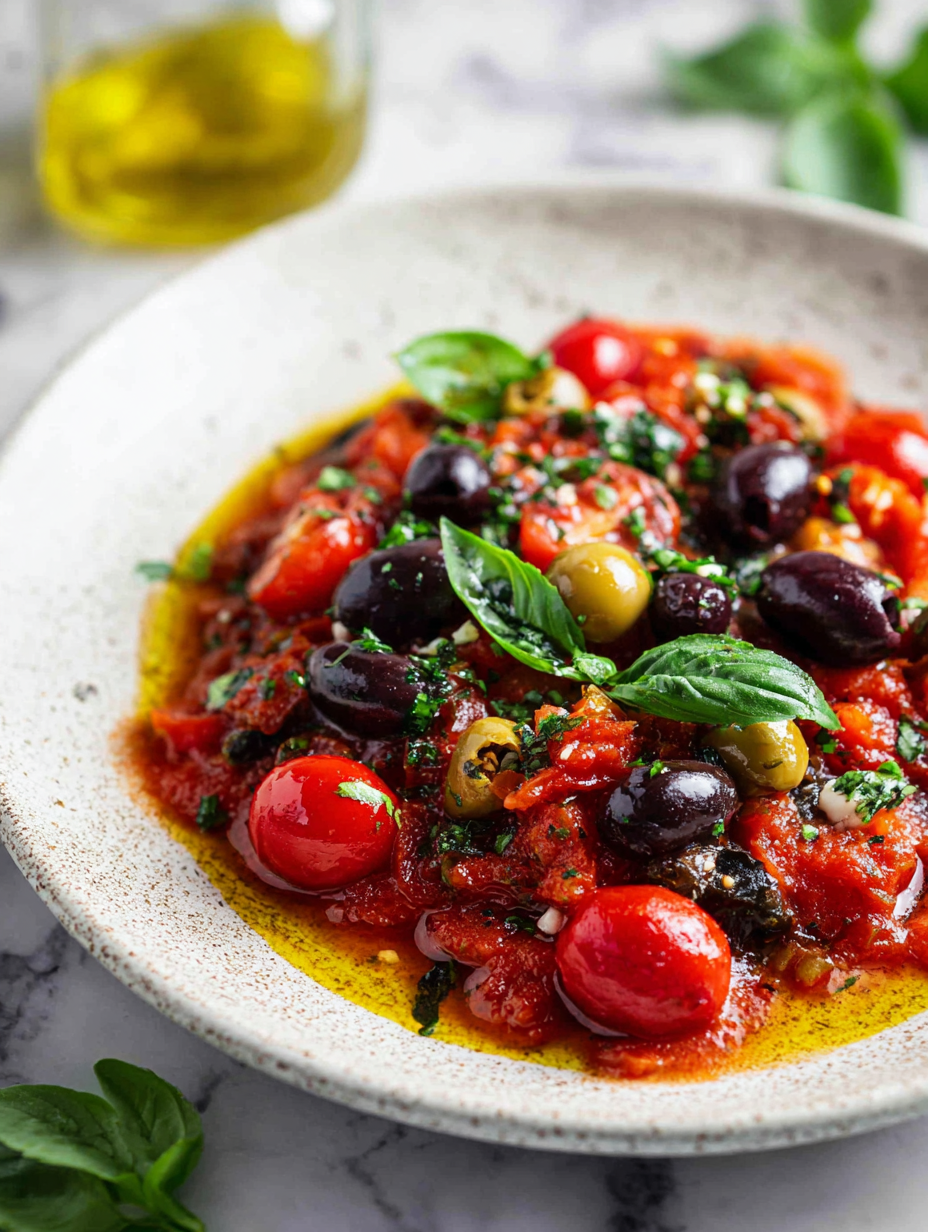
- The sauce has thickened slightly, glistening in the pan, with a lively, spicy aroma.
Vegan Puttanesca
Ingredients
Equipment
Method
- Bring a large pot of salted water to a boil and cook your pasta until al dente. Drain and set aside.
- While the pasta cooks, heat the olive oil in a large skillet over medium heat until shimmering and fragrant.
- Add the minced garlic to the skillet and sauté for about 30 seconds until it releases a fragrant aroma, being careful not to brown it.
- Pour in the diced tomatoes and stir, allowing them to soften and release their juices for about 5 minutes, creating a bubbling, fragrant sauce.
- Stir in the sliced olives and rinsed capers, cooking for another 2-3 minutes until they soften and release their deep, briny aroma.
- Sprinkle in the red chili flakes, stirring well to distribute the heat, and simmer gently for another 2 minutes to meld the flavors.
- Combine the cooked pasta with the sauce, tossing gently to coat all the noodles evenly with the briny, glossy sauce.
- Remove from heat, drizzle with a little extra olive oil if desired, and serve immediately for a vibrant, flavorful meal.
Pro tips for Puttanesca
- Bold garlic: Crush and sauté until fragrant, not browned, to develop a mellow, nutty aroma.
- Simmer gently: Keep sauce at a gentle bubble; high heat can burn the tomatoes and dull flavors.
- Taste as you go: Adjust salt and chili flakes gradually; briny ingredients can vary in saltiness.
- Finish with oil: Drizzle good olive oil at the end for a fresh, fruity aroma and silky texture.
- Crack fresh pepper: Add just before serving; it brightens the dish with a sharp, spicy note.
- Use the right pasta: Sturdy spaghetti holds up well; softer or thinner noodles may turn mushy or soggy.
- Adjust thickness: If sauce thickens too much, splash in a bit of hot pasta water to loosen it up.
Common mistakes and how to fix them
- FORGOT to adjust salt: Rinse capers thoroughly to prevent excessive salinity.
- DUMPED oil too early: Add olive oil after garlic releases aroma, not before.
- OVER-TORCHED tomatoes: Cook on medium; high heat burns the delicate flesh quickly.
- SKIPPED resting time: Let sauce sit 2 minutes before mixing with pasta for flavor melding.
Quick fixes and pantry swaps
- If sauce is too thick, splash in warm water and stir—brings back silky texture.
- When olives seem dull, add a splash of olive brine to revive their briny punch.
- Splash a bit of lemon juice if sauce lacks brightness—shimmering and zesty aroma will lift it.
- Patch over-salted sauce with a small splash of coconut milk or plant-based cream for balance.
- Shield burnt tomatoes by removing from heat immediately—start a fresh batch with new tomatoes.
Prep, store, and reheat tips
- Prepare the sauce up to 2 days in advance; store in an airtight container in the fridge, the briny aroma will deepen overnight.
- Refrigerate for up to 3 days; the flavors mellow and meld, but the sauce might thicken—add a splash of warm water when reheating.
- Freeze in small portions for up to 1 month; the rich, salty notes will intensify slightly, so taste and adjust seasoning after thawing.
- Reheat gently over low heat, stirring often; look for a lively simmer and a fragrant burst of garlic and briny elements, avoid boiling rapidly to preserve flavor and texture.
Top questions about Vegan Puttanesca
1. How do I know when the sauce is ready?
The dish should have a lively, briny aroma with a hint of garlic and smoky olives. The tomatoes should be soft and bursting, with a slightly thickened, glossy sauce. The pasta or rice should be coated with a fragrant, flavorful coating, not swimming in excess liquid.
2. What should the sauce look and smell like?
Look for bubbling tomatoes, softened olives and capers, and a fragrant, briny smell. The sauce should be slightly thickened and shiny. Taste and adjust seasoning before mixing with pasta.
3. Can I use different noodles or grains?
Use dried pasta cooked al dente according to package instructions. For cauliflower rice, sauté briefly until tender. The key is the sauce’s richness and briny punch, not the pasta texture alone.
4. Can I substitute ingredients?
Yes, swap canned cherry tomatoes with fresh cherry tomatoes, but cook them longer for bright, less cooked flavor. Use green olives instead of kalamata for a milder, fruitier note.
5. How can I modify the recipe?
Rinse capers to reduce saltiness if needed. Use a milder olive oil if you want less pronounced fruity aroma. Adjust chili flakes based on spice preference, starting small and tasting. Use fresh herbs for garnish to brighten the dish.
6. What makes the olives special?
The briny, smoky flavor of kalamata olives is key. They soften beautifully and release their deep aroma. Ripe, shiny olives add a punch of flavor that elevates the dish.
7. Any quick tips for cooking?
Add the olive oil after the garlic releases its aroma, not before. Use medium heat (about 160°C/320°F) so ingredients cook gently without burning. Taste and adjust seasoning at every step.
8. Can I make this in advance?
Prepare the sauce up to 2 days ahead and store in the fridge. Reheat gently, adding a splash of water or broth. The flavors deepen overnight, making it even more flavorful.
9. What if the sauce goes wrong?
When the sauce is too thick, splash in warm water or broth and stir. If it’s dull, add a squeeze of lemon or a splash of brine. For burnt spots, remove from heat immediately and start fresh.
10. Any kitchen tricks for best results?
Use a large skillet for even cooking. Cook garlic gently until fragrant, not browned. Taste and adjust seasoning before serving. Keep heat moderate to prevent burning and preserve bright flavors.
This vegan Puttanesca isn’t just a quick dinner; it’s a little reminder that pantry staples can turn into something vibrant and satisfying. The briny, smoky punch of olives and capers always feels like a small rebellion against the hectic pace of weeknights.
Whenever I make it, I think about how simple ingredients can come together with a bit of heat and patience to create something unexpectedly rich. It’s a dish that’s honest, gutsy, and always ready when I need a meal that’s both easy and full of flavor.

Hi, I’m Harper Evans. Welcome to Crushing These Flavors, my home on the internet where curiosity, comfort, and a deep love for food come together. I’m a passionate food blogger who believes great meals are built through attention, practice, and a willingness to experiment.