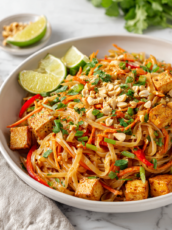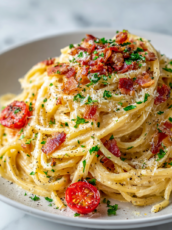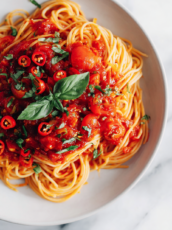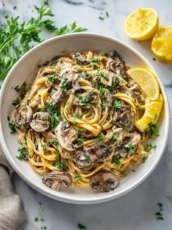
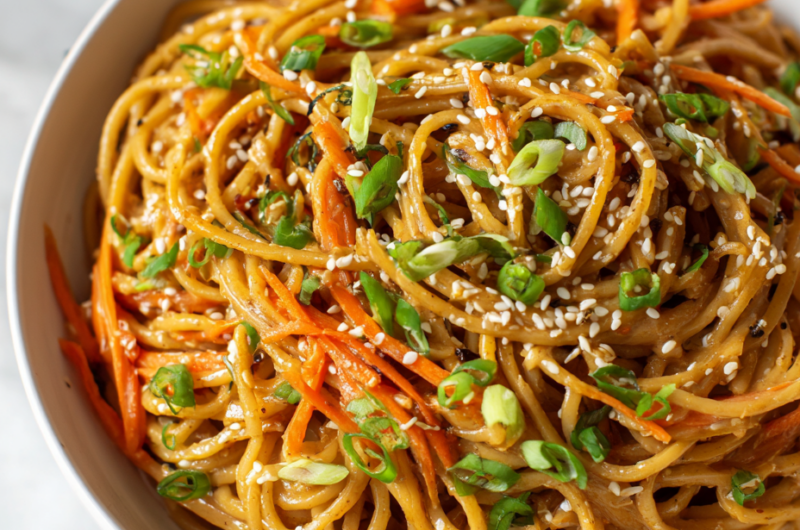
This recipe started as a quest to really understand how sesame oil can elevate simple noodles. I’ve always loved the nutty, toasted aroma that sesame lends, but I wanted to push beyond that, balancing it perfectly with soy for a smoky depth. It’s not about overpowering — it’s about harmony, like a quiet symphony in your bowl.
What makes this dish special isn’t just the ingredients, but how small adjustments can make a big difference. A splash more soy, a little extra toasting, a dash of heat — these tiny tweaks turn everyday noodles into something memorable. Plus, it’s quick, honest, and forgiving enough to adapt to whatever’s in your kitchen.
Focusing on the overlooked art of balancing sesame oil and soy for a deeply toasted, almost smoky flavor that transforms simple noodles into a memorable dish.
The story behind this recipe
- This dish came together during a chaotic week when I needed something quick, honest, and deeply satisfying. I remember the first time I toasted sesame seeds until they crackled and turned a rich, golden brown — that smell alone took me back to my grandma’s kitchen, where simple ingredients felt like treasures. I wanted to capture that warmth and depth in a noodle dish that’s easy enough for any weeknight but rich enough to feel special.
- Over time, I started experimenting with balancing the smoky nuttiness of toasted sesame oil with a splash of soy, trying to find that perfect harmony. Each tweak brought a little more character, a little more soul, until I finally landed on a version that feels like a hug in a bowl — familiar, bold, and a little messy in the best way.
- heading: ‘The story behind this recipe’
Ingredient breakdown: key components
- Sesame oil: I love to toast it until it’s fragrant and slightly smoky, like a warm blanket. You can skip this step, but it’ll lose that deep nutty aroma.
- Soy sauce: I prefer a darker, richer soy for depth, but a light soy works if you want a milder flavor. Adjust to taste, and don’t forget to taste-test the saltiness.
- Maple syrup or honey: Just a touch adds a subtle sweetness that balances the salt and sesame. If you’re vegan, use maple syrup — it still gives a nice caramel undertone.
- Rice vinegar: I like a splash of rice vinegar for brightness and a slight tang. Skip it if you prefer a more neutral sauce, but it really lifts the flavors.
- Garlic and ginger: Fresh is best — I crush garlic and mince ginger until they’re fragrant, about 30 seconds in the pan. If you’re short on time, garlic powder and ground ginger still work, but won’t be quite as punchy.
- Noodles: I use chewy, al dente soba or spaghetti, cooked until just tender. Overcooking makes them mushy; undercooking leaves them too firm. Rinse quickly to stop the cooking and keep them from sticking.
- Sesame seeds: Toasted until golden and crispy, they add a satisfying crunch. Don’t skip this step — it’s the final flavor boost. Keep a close eye so they don’t burn and turn bitter.
Spotlight on key ingredients
Sesame oil:
- I love to toast it until it’s fragrant and slightly smoky, like a warm blanket. You can skip this step, but it’ll lose that deep nutty aroma.
- Sesame seeds: Toasted until golden and crispy, they add a satisfying crunch. Don’t skip this step — it’s the final flavor boost. Keep a close eye so they don’t burn and turn bitter.
Soy sauce and rice vinegar:
- Soy sauce: I prefer a darker, richer soy for depth, but a light soy works if you want a milder flavor. Adjust to taste, and don’t forget to taste-test the saltiness.
- Rice vinegar: I like a splash of rice vinegar for brightness and a slight tang. Skip it if you prefer a more neutral sauce, but it really lifts the flavors.
Notes for ingredient swaps
- OIL: Toasted sesame oil adds a smoky, rich aroma that’s key. For a milder flavor, use toasted walnut or avocado oil, but it won’t have that deep nuttiness.
- SOY SAUCE: Dark soy provides a salty, umami punch, but light soy or coconut aminos can cut the salt and offer a subtler taste.
- SWEETENER: Maple syrup adds a caramel note; agave nectar is a thinner, slightly more neutral alternative. Skip if you prefer less sweetness.
- VINEGAR: Rice vinegar brightens the dish with a gentle tang. Apple cider vinegar can be a tangy swap, but may alter the flavor profile.
- NOODLES: Soba noodles are traditional, but spaghetti or rice noodles work well. Cook until just tender, no mush, for the best texture.
- SEEDS: Toasted sesame seeds give crunch and aroma. Pumpkin seeds are an excellent nutty substitute, adding a different texture and flavor.
- GARNISH: Fresh scallions or cilantro brighten the dish. If unavailable, chopped basil or parsley add freshness and color.
Equipment & Tools
- Large pot: Boil and cook the noodles.
- Small bowl: Mix sauce ingredients.
- Skillet or wok: Toast sesame seeds and combine ingredients.
- Tongs or fork: Toss and coat noodles evenly.
Step-by-step guide to vegan sesame noodles
- Gather your equipment: a large pot for boiling noodles, a small bowl for mixing, a skillet or wok for toast and sauce, and tongs or a fork for tossing.
- Cook the noodles: bring a large pot of water to a boil (around 100°C / 212°F). Add a pinch of salt, then cook noodles until just al dente, about 8-10 minutes. Drain and rinse under cold water to stop the cooking and prevent sticking.
- Toast the sesame seeds: heat a dry skillet over medium heat (around 160°C / 320°F). Add sesame seeds, toast until golden and fragrant, about 2-3 minutes, shaking often. Remove and set aside.
- Prepare the sauce: in the small bowl, combine soy sauce, rice vinegar, maple syrup, minced garlic, and grated ginger. Mix well and set aside.
- Toast the sesame oil: add sesame oil to the skillet over medium heat. Once hot and shimmering (about 160°C / 320°F), add a splash of the sauce mixture to toast for about 30 seconds, releasing a fragrant, smoky aroma. If it smokes excessively, lower the heat.
- Combine everything: add the drained noodles to the skillet. Pour in the remaining sauce. Toss vigorously with tongs or a fork for 2-3 minutes, until noodles are coated and heated through. If they start sticking or burning, add a splash of water or vegetable broth.
- Finish with toasted sesame seeds: sprinkle over the noodles, toss again, and check for flavor balance—add more soy or vinegar if needed.
- Rest and plate: let the noodles sit for a minute to meld flavors. Serve immediately, garnished with extra sesame seeds if desired.
- Check doneness: the noodles should be hot, with a glossy coating, aromatic soy-sesame scent, and a slight chew. The sesame seeds should be crispy and fragrant.
Let the noodles rest for a minute off heat to allow flavors to meld. Serve hot, garnished with extra sesame seeds or scallions if desired. Toss once more before plating for an even coating.
How to Know It’s Done
- Noodles are tender but not mushy, with a slight bite.
- Sauce is glossy, well-coated, with a balanced aroma of soy and toasted sesame.
- Sesame seeds are toasted golden and crispy, not bitter or burnt.
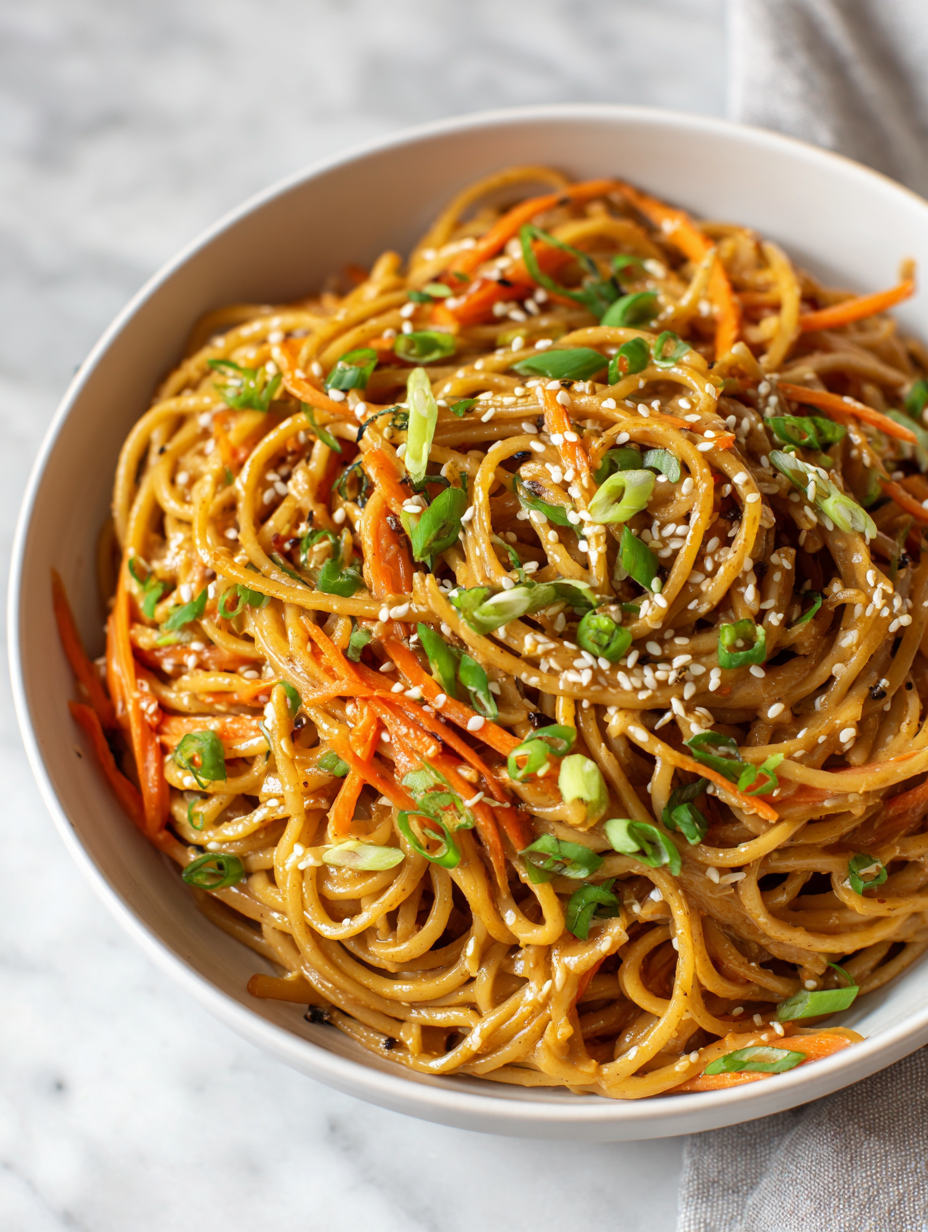
Vegan Sesame Noodles
Ingredients
Equipment
Method
- Bring a large pot of water to a boil, add a pinch of salt, and cook the noodles until just al dente, about 8-10 minutes. Drain and rinse under cold water to stop the cooking and prevent sticking.
- While the noodles cook, toast the sesame seeds in a dry skillet over medium heat, shaking often, until golden and fragrant, about 2-3 minutes. Remove from heat and set aside.
- In a small bowl, whisk together soy sauce, rice vinegar, maple syrup, minced garlic, and grated ginger until well combined. This will be your flavorful sauce.
- Heat the toasted sesame oil in a skillet or wok over medium heat until shimmering and fragrant, about 1 minute. Carefully add a splash of the sauce mixture to the hot oil, listening for a crackle, and toast for about 30 seconds. This releases a smoky, nutty aroma.
- Add the drained noodles to the skillet and pour in the remaining sauce. Toss vigorously with tongs or a fork for 2-3 minutes, ensuring the noodles are glossy, well-coated, and heated through. If they start sticking, add a splash of hot water.
- Sprinkle the toasted sesame seeds over the noodles, then toss again to distribute evenly. Check the flavor—add more soy or vinegar if needed for balance.
- Let the noodles rest for a minute off the heat to allow flavors to meld. Serve immediately, garnished with extra sesame seeds or chopped scallions if desired, for a fragrant and colorful presentation.
Pro tips for perfect sesame noodles
- Toasting sesame seeds: Keep a close eye and shake the pan often; they go from golden to bitter quickly.
- Heating sesame oil: Add a splash to the hot skillet and listen for a crackle—fragrant and smoky, but don’t let it smoke excessively.
- Balancing flavors: Taste the sauce before tossing; a dash more soy or vinegar can make all the difference in harmony.
- Noodle texture: Cook until just al dente, then rinse under cold water to stop cooking and prevent sticking.
- Tossing noodles: Use tongs or a fork to coat evenly, and add a splash of hot water if they start to stick or cool down too much.
- Adjusting heat: Keep the skillet over medium and add sauce gradually; too high, and sesame oil can burn, too low, flavors won’t develop.
- Final crunch: Toast extra sesame seeds separately and sprinkle on top just before serving for maximum crunch and aroma.
Common mistakes and how to fix them
- FORGOT to toast sesame oil → toast it until fragrant for a smoky depth.
- DUMPED sauce ingredients before tasting → taste and adjust soy or vinegar for balance.
- OVER-TORCHED sesame seeds → watch closely to prevent bitterness and bitterness.
- USED cold noodles directly from fridge → warm slightly or toss in hot water to loosen.
Quick fixes and pantry swaps
- If sauce is too thick, splash in hot water and stir until glossy.
- When sesame seeds burn, immediately remove and toast a fresh batch.
- Splash soy or vinegar if flavors taste flat or dull.
- Patch sticky noodles by tossing with a few drops of hot water.
- Shield delicate sesame oil from high heat to prevent smoking and bitterness.
Prep, store, and reheat tips
- Prepare the sauce ahead: mix soy, vinegar, and sweetener. Keeps for up to 3 days; the flavors meld and intensify overnight, making your assembly quicker.
- Toast sesame seeds in advance: store in an airtight container for up to a week. They stay crispy and fragrant, ready to sprinkle on at the last moment.
- Cook noodles ahead: rinse and toss with a tiny bit of oil to prevent sticking. Store in the fridge for up to 2 days. Reheat briefly in hot water until just warm, then toss again.
- Assemble the dish just before serving: keep the toasted sesame oil separate if possible. When ready, reheat noodles gently, toss with sauce, and finish with seeds for the best flavor and texture.
- Refrigerate leftovers: store in an airtight container for up to 2 days. Expect the noodles to soak up some sauce; a quick reheat will revive their texture, with a fragrant sesame smell.
Top questions about vegan sesame noodles
1. Can I make this recipe without sesame oil?
Yes, you can skip the sesame oil or use a milder oil, but you’ll lose some of that smoky, nutty aroma that makes this dish special.
2. Can I make it gluten-free?
Absolutely. Use tamari instead of soy for a gluten-free version, and choose a neutral oil like avocado if you want a less toasted flavor.
3. How do I reheat leftover noodles?
Warm the noodles gently in hot water for a minute or two, then toss with sauce to revive flavor and texture.
4. How do I fix the sauce if it’s too salty or bland?
Adjust the soy and vinegar to your taste. If it’s too salty, dilute with a splash of water or add more sweetener for balance.
5. Can I use garlic powder instead of fresh?
Use fresh garlic and ginger for the best flavor, but garlic powder and ground ginger work in a pinch with slightly muted aroma.
6. How do I toast sesame seeds properly?
Toast sesame seeds until golden and fragrant, but keep a close eye—they burn quickly and turn bitter.
7. What’s the perfect noodle texture?
Cook noodles until just tender (al dente) to prevent mushiness, then rinse under cold water to stop cooking and prevent sticking.
8. Can I add spice to the noodles?
Yes, adding a splash of chili oil or hot sauce can give it a nice spicy kick—adjust to your heat preference.
9. What equipment do I need for this recipe?
Use a non-stick skillet or wok to evenly toast and cook, and a pair of tongs or a fork for tossing the noodles thoroughly.
10. Can I make parts of this dish in advance?
Yes, you can prepare the sauce and toast seeds ahead of time; store in the fridge for up to 3 days for quick assembly.
This dish is a reminder that even simple ingredients, when balanced well, can create something deeply satisfying. The nutty aroma of toasted sesame, combined with the smoky soy sauce, makes each bite memorable. It’s a quick, honest meal that’s perfect for busy nights or when you want something comforting without fuss.
In a world full of trends, this recipe feels timeless—something I come back to when I need a little grounding in the kitchen. It’s imperfect, adaptable, and full of flavor, just like those honest, messy moments in cooking that turn out to be the best. Sometimes, that’s all you need in a bowl.

Hi, I’m Harper Evans. Welcome to Crushing These Flavors, my home on the internet where curiosity, comfort, and a deep love for food come together. I’m a passionate food blogger who believes great meals are built through attention, practice, and a willingness to experiment.