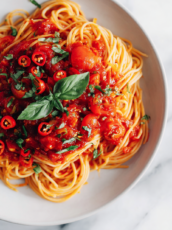
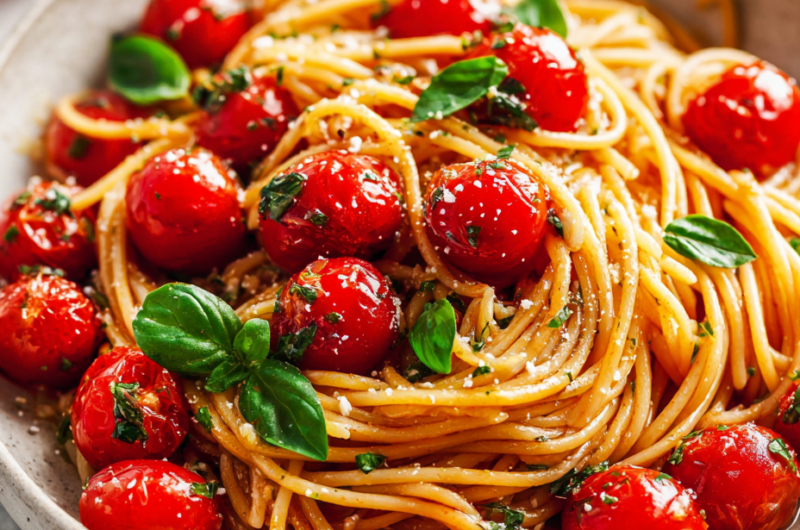
This vegan tomato basil pasta is all about embracing the beauty of simplicity and rustic charm. No need for fancy techniques or perfect shapes—just honest ingredients that shine through their natural quirks. I love how the slightly uneven, juicy tomatoes and fresh basil come together in a dish that feels like a shared secret from a cozy kitchen corner.
What draws me in each time is how this pasta captures the essence of good, imperfect food. The ripest, oozy tomatoes meld with fragrant garlic and olive oil, creating a sauce that’s vibrant yet unpolished. It’s a reminder that sometimes, the best meals are the ones that celebrate each ingredient’s unique personality, not a glossy presentation.
Focusing on the overlooked charm of rustic, imperfect tomato basil pasta that celebrates each ingredient’s natural quirks and textures, making it feel more like a shared kitchen secret than a polished recipe.
Inspiration Behind the Dish
This dish was born out of a lazy summer afternoon when I had just a handful of ripe tomatoes and a bunch of basil left from my garden. I wanted something honest and quick, no fuss, just bright flavors that celebrate the season’s best. Making it reminded me of those evenings spent in my grandmother’s kitchen, where simplicity was the key to true comfort. It’s a recipe rooted in those memories—imperfect, vibrant, and full of life.
Ingredient breakdown: key components
- Cherry tomatoes: I love how their juices burst out when I bite in, releasing a sweet, almost smoky flavor. Skip the heirlooms for a more concentrated tomato experience.
- Fresh basil: The aroma is intoxicating, especially when roughly torn right before mixing. If you only have dried, use half as much and add at the end for a hint of freshness.
- Garlic: The key to depth. I prefer thinly sliced to maximize surface area, which crisps up slightly and releases a richer aroma than minced. Roast a few cloves for a sweeter note if you like.
- Olive oil: Use a good extra virgin for that peppery, grassy note. Warm it gently over low heat to coax out more flavor without frying the garlic too aggressively.
- Pasta: I opt for spaghetti or bucatini for their ability to hold sauce well. Cook just to al dente—no mush, just a slight bite that holds up to the juicy tomatoes.
- Sea salt and black pepper: Season generously, tasting as you go. A pinch of flaky sea salt at the end brightens the whole dish, making each bite pop.
- Optional red pepper flakes: A sprinkle adds a subtle heat that complements the sweet tomatoes and fragrant basil—adjust to your spice tolerance.
Spotlight on key ingredients
Cherry tomatoes:
- Their juicy burst and sweet, smoky aroma make every bite lively. Skip heirlooms for more concentrated flavor.
- Fresh basil: The aroma is intoxicating, especially when torn right before mixing. If only dried is available, use half and add at the end for freshness.
Garlic & Olive Oil:
- Garlic: Thinly sliced, it crisps slightly and releases a deep, aromatic sweetness. Roasting a few cloves can add a mellow, caramelized note.
- Olive oil: Use a good extra virgin, gently warmed to extract grassy, peppery notes without frying the garlic too aggressively.
Notes for ingredient swaps
- Sweeteners: Maple syrup or agave can replace sugar for a mild, floral sweetness that doesn’t overpower the tomatoes.
- Oil: Coconut or avocado oil can be used instead of olive oil, adding a richer or more neutral flavor depending on your choice.
- Pasta: Gluten-free or legume-based pasta works well if you’re avoiding wheat, though they may have a different texture and bite.
- Fresh Basil: Fresh basil is ideal, but dried basil can be used—use half as much, and add it earlier to let flavors develop.
- Tomatoes: Canned crushed tomatoes can substitute fresh, especially in off-season; choose low-acid varieties for a sweeter, mellow sauce.
- Garlic: Roasted garlic offers a sweeter, softer flavor, which can deepen the sauce’s richness—just add it at the start with oil.
- Salt: Sea salt or kosher salt enhances flavor more than table salt; adjust quantity to taste, especially if using salted ingredients.
Equipment & Tools
- Large pot: Boiling pasta
- Large skillet: Cooking sauce and combining ingredients
- Wooden spoon: Stirring and mixing
- Knife: Prepping garlic and tomatoes
- Chopping board: Prepping ingredients
- Pasta strainer: Draining cooked pasta
Step-by-step guide to vegan tomato basil pasta
- Equipment & Tools: Gather a large skillet (preferably non-stick), a wooden spoon, a sharp knife, a chopping board, and a pasta strainer. The skillet is for cooking the sauce; the spoon for stirring; the knife and board for prep; the strainer for draining pasta.
- Bring a large pot of salted water (1 tbsp salt per 4 cups water) to a boil over high heat (~100°C/212°F). Add pasta (about 200g for 2 servings). Cook until just al dente, about 8-10 minutes. Taste test for slight bite; drain and set aside, reserving a cup of pasta water.
- While pasta cooks, heat 2 tbsp olive oil in the skillet over low-medium heat (~135°C/275°F). Add 3-4 thinly sliced garlic cloves, cook gently until fragrant (~1 min). Watch for golden edges, not brown. If garlic burns, remove immediately to avoid bitterness.
- Add 2 cups halved cherry tomatoes to the skillet. Increase heat slightly (~150°C/300°F). Cook, stirring occasionally, until tomatoes soften and release juices (~5-7 min). The mixture should look saucy and bubbling, with some tomatoes starting to ooze.
- Tear a handful of fresh basil leaves into the skillet. Stir in, allowing the aroma to bloom. Check for seasoning—add salt and black pepper to taste (~1/2 tsp salt, freshly ground pepper). If sauce seems too thick, stir in reserved pasta water a tablespoon at a time until desired consistency (~2-3 tbsp).
- Add cooked pasta directly to the skillet. Toss gently to coat, heating everything through (~1 min). Cook just long enough for the flavors to meld. If the sauce feels dry, splash in more pasta water; if too loose, cook a minute longer to thicken slightly.
- Remove from heat. Let rest for 1-2 minutes to allow flavors to settle. Finish with a drizzle of extra virgin olive oil and a few torn basil leaves for freshness. Plate immediately, garnishing with more basil if desired.
- Check for doneness: pasta should be heated through, sauce glossy and clingy, basil vibrant, and aroma bright and fragrant. The tomatoes should be juicy and slightly blistered, with garlic mellow and fragrant.
Let the pasta rest for 1-2 minutes off heat, then serve immediately with extra basil and a drizzle of olive oil. Garnish as desired for presentation.
How to Know It’s Done
- Pasta is al dente with a slight bite.
- Tomato sauce is glossy, fragrant, and slightly thickened.
- Basil aroma is fresh, with visible vibrant green leaves.
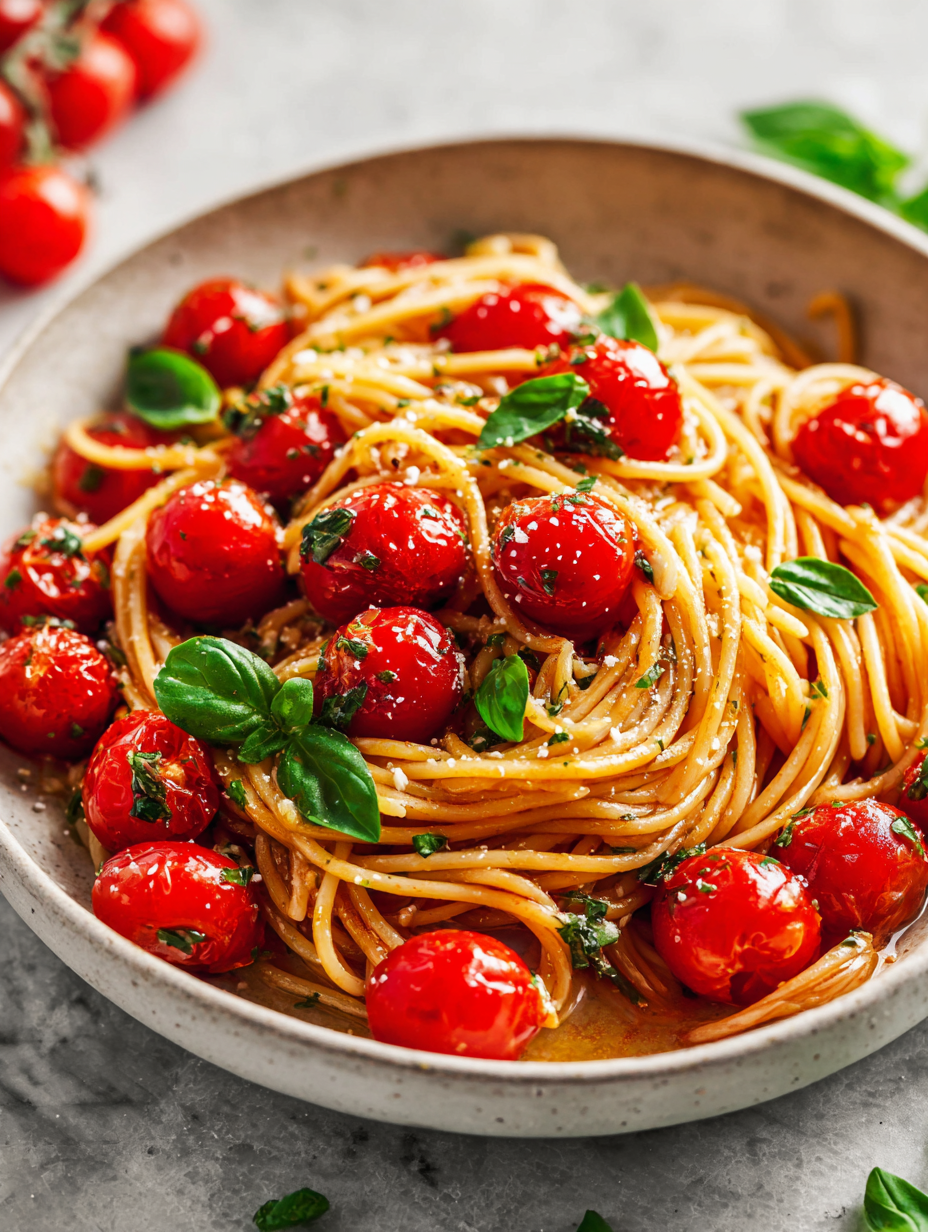
Rustic Vegan Tomato Basil Pasta
Ingredients
Equipment
Method
- Bring a large pot of salted water to a boil, then add the pasta and cook until just al dente, about 8-10 minutes. Drain, reserving a bit of pasta water, and set aside.
- While the pasta cooks, heat the olive oil gently in a large skillet over low-medium heat until fragrant, about 1 minute. Add the sliced garlic and cook until it just begins to turn golden and releases a warm, aromatic scent—be careful not to burn it.
- Add the halved cherry tomatoes to the skillet. Increase the heat slightly and cook, stirring occasionally, until the tomatoes soften and release their juices, about 5-7 minutes. The mixture should look saucy and bubbling, with some tomatoes beginning to blister.
- Stir in the torn basil leaves, allowing their fragrant oils to bloom in the warm sauce. Season generously with sea salt, black pepper, and red pepper flakes if using. If the sauce seems too thick, add a splash of the reserved pasta water to loosen it slightly and create a glossy coating.
- Add the drained pasta directly into the skillet. Toss gently with the tomato mixture, letting the flavors meld for about 1 minute, ensuring the pasta is well coated and heated through. If needed, add a little more pasta water to achieve your desired consistency.
- Remove the skillet from heat and let the pasta rest for a minute to allow the flavors to settle. Finish with a drizzle of good olive oil and more torn basil if desired. Serve immediately for the best freshness and vibrancy.
Notes
Pro tips for perfect vegan pasta
- Bolded mini-head: Use the ripest, juiciest tomatoes you can find—they’ll release more flavor and ooze beautifully during cooking.
- Bolded mini-head: Tear basil rather than chop—this preserves its aromatic oils and releases a fresher scent in the dish.
- Bolded mini-head: Slice garlic thinly—more surface area means quicker, more fragrant release without the risk of burning.
- Bolded mini-head: Warm your olive oil gently—just enough to coax out grassy, peppery notes without frying the garlic too aggressively.
- Bolded mini-head: Reserve some pasta water—its starchy, salty goodness can help loosen or thicken your sauce perfectly.
- Bolded mini-head: Keep an eye on your tomatoes—look for bubbling and softness, signaling they’re releasing their sweet, smoky juices.
- Bolded mini-head: Finish with a quick toss—just 1 minute to meld flavors without overcooking the pasta or sauce.
Common mistakes and how to fix them
- FORGOT to adjust heat → Use medium-low to prevent garlic burning.
- DUMPED pasta water too quickly → Save some for sauce consistency.
- OVER-TORCHED garlic → Remove immediately if it turns brown to avoid bitterness.
- UNDERSALTED sauce → Taste and add more salt as needed to brighten flavors.
Quick fixes and pantry swaps
- When sauce looks watery → Splash in a little more pasta water to thicken and brighten.
- If garlic tastes bitter → Remove early or lower heat to prevent burning and bitterness.
- Splash with lemon juice for brightness if tomatoes lack acidity.
- Patch over salty sauce with a splash of water or more fresh basil for freshness.
- Shield burning garlic by stirring constantly and reducing heat immediately.
Prep, store, and reheat tips
- Prepare the tomato mixture by chopping tomatoes and tearing basil up to a day ahead. Keep refrigerated in an airtight container—brighten with a quick stir before serving, as flavors deepen and intensify overnight.
- Cook the pasta until just al dente, then drain and toss with a little olive oil to prevent sticking. Store in a sealed container for up to 2 days; reheat in boiling water or microwave until hot, with a splash of water to revive texture.
- You can make the garlic-infused oil and tomato sauce base up to 2 days in advance. Store separately in the fridge; reheat gently over low heat, stirring often, until fragrant and bubbling again.
- Refrigerated pasta and sauce will develop a richer, more integrated flavor overnight. Expect the sauce to thicken slightly; loosen with a splash of warm water or reserved pasta water when reheating.
- For longer storage, freeze the sauce in an airtight container for up to 1 month. Thaw in the fridge overnight, then reheat slowly, watching for bubbling and aroma—look for vibrant, fresh basil notes once reheated.
Top questions about vegan pasta
1. Can I use canned tomatoes instead of fresh?
Use ripe, juicy tomatoes for vibrant flavor and natural sweetness, especially during peak season for best results.
2. Can I substitute dried basil for fresh?
Yes, canned crushed tomatoes work well, especially in winter or when fresh ones are less flavorful.
3. How do I prevent the garlic from burning?
Fresh basil gives a bright aroma, but dried can be used—add it earlier to help release flavors.
4. What’s the best pasta shape for this dish?
Cook garlic on low heat and slice thinly; remove from heat immediately if it turns golden to avoid bitterness.
5. Can I make this dish gluten-free?
Spaghetti or bucatini hold sauce nicely and provide a satisfying bite; choose based on your preference.
6. How do I keep the sauce from drying out?
Yes, use gluten-free pasta options like rice or chickpea pasta, but note they may have a different texture.
7. Can I add other vegetables?
Add reserved pasta water gradually to loosen the sauce and keep it glossy and clingy to the pasta.
8. How long does leftovers last?
Certainly, sautéed zucchini or spinach can add extra vibrancy and nutrients—add them toward the end of cooking.
9. Can I freeze leftovers?
Store in an airtight container in the fridge for up to 2 days; reheat gently to preserve freshness.
10. How do I reheat without losing flavor?
Yes, freeze in a sealed container for up to a month; thaw overnight and reheat slowly for best flavor.
This dish isn’t just about the ingredients; it’s about capturing a moment of simplicity and honest flavor that feels like a little secret in your kitchen. When the tomatoes burst and the basil’s aroma fills the air, it’s a reminder that sometimes, less really is more.
In these hectic times, coming back to something straightforward and vibrant like this pasta can be a quiet act of reclaiming joy. It’s imperfect, lively, and full of the kind of comfort that stays with you long after the last bite.

Hi, I’m Harper Evans. Welcome to Crushing These Flavors, my home on the internet where curiosity, comfort, and a deep love for food come together. I’m a passionate food blogger who believes great meals are built through attention, practice, and a willingness to experiment.